

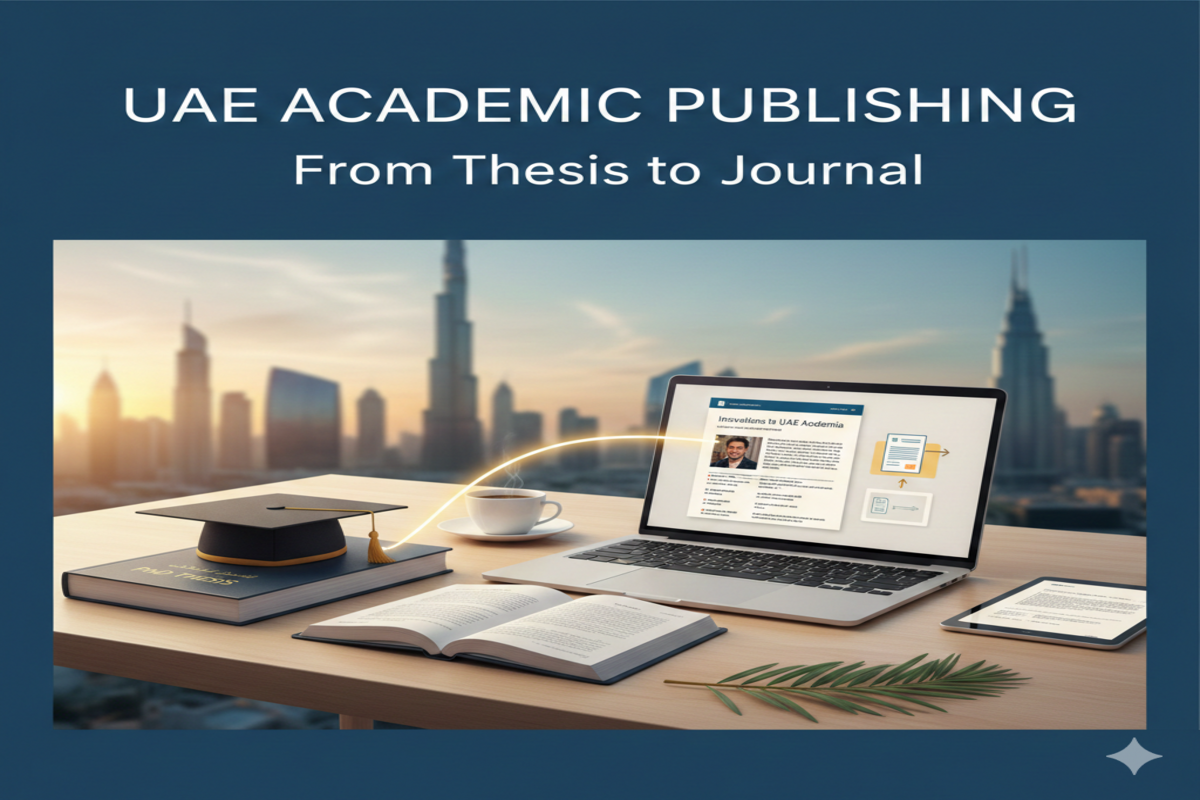
A Step-by-Step Guide From Dissertation to Publication
- Raul Smith
- Education
- 2026-01-22 15:15:46
- 2381K
Congratulations on completing your thesis! It represents years of hard work, dedication, and original thought. However, the journey of your research isn’t over. To maximize its impact and contribute to your academic field, the next crucial step is converting that hefty document into a concise, focused journal article. This process is more than just cutting words—it’s a strategic re-imagining of your work for a specialized audience. Here are the essential tips and best practices to guide you through a successful transformation.
Understanding the Fundamental Difference
First, recognize that a thesis and a journal article serve different purposes and audiences.
Thesis/Dissertation: A comprehensive document written to demonstrate your mastery of a subject and research methodology to a committee. It’s exhaustive, often includes lengthy literature reviews, methodological detail, and all findings.
Journal Article: A concise, persuasive argument aimed at experts in your specific niche. It tells one compelling story, follows a strict format (like IMRaD), and is driven by a clear, novel central finding.
The mindset shift is from showing everything you know to advancing a specific claim in the field.
Step 1: Identify Your Core Story and Target Journal
You cannot shrink your entire thesis into one article. Begin by asking:
What is the single most significant, novel finding?
Your thesis may have multiple threads; an article needs one strong, central narrative.
Which journal is the right home?
Select 2-3 target journals before you start writing. Read their aims, scope, and recent articles to understand their preferred structure, tone, and article length. This decision will shape everything that follows.
Pro Tip: Look for "special issues" or calls for papers that align with your work—they can offer faster publication routes.
Step 2: Adapt the Structure and Ruthlessly Refocus
Now, map your thesis content onto the standard IMRaD (Introduction, Methods, Results, and Discussion) structure of a journal article.
Abstract (≈250 words):
This is a standalone advertisement for your paper. Succinctly state the problem, methods, key results, and the main conclusion. Write this last.
Introduction (15-20% of the article):
Thesis vs. Article: A thesis introduction often builds a broad foundation. An article introduction must be a focused funnel.
Strategy: Start with the specific research gap or problem your article addresses. Swiftly review only the most relevant literature to establish context and justify your study. End with a clear, succinct statement of your research objective or hypothesis.
Methods (10-15%):
Thesis vs. Article: Theses include every detail for replicability. Articles require completeness but not exhaustive detail.
Strategy: Provide enough information for replication, but refer to established protocols rather than describing every step. If your thesis methodology is novel, this section can be its strength. Use subheadings for clarity. Often, this section can be shortened significantly from the thesis version.
Results (25-30%):
Thesis vs. Article: A thesis shows all data. An article shows only the data that directly supports the core story.
Strategy: Be selective. Use your most powerful tables and figures. Summarize or omit secondary findings. The narrative here should flow logically, guiding the reader to your main conclusion. Data is not the same as story.
Discussion (20-25%):
Thesis vs. Article: Thesis discussions can be lengthy, exploring every implication. Article discussions must be interpretive and persuasive.
Strategy: Start by succinctly restating the main finding. Then, interpret its meaning in relation to the gap you identified in the introduction. Compare with existing literature (acknowledging both alignments and contradictions). Discuss limitations honestly but strategically—frame them as boundaries of your claim, not weaknesses. End with a strong, forward-looking conclusion on the implications for theory or practice.
References: Follow the target journal’s style guide meticulously. Only include citations referenced in the article.
Step 3: Master the Art of Concise and Academic Writing
Kill Your Darlings: Be prepared to cut entire chapters, paragraphs, and sentences you labored over. If it doesn’t serve the core story, remove it.
Tighten Your Language:
Change passive voice to active where possible (e.g., "The experiment was conducted" becomes "We conducted the experiment").
Eliminate redundancies and vague phrases.
Ensure every paragraph has a clear topic sentence and contributes to the argument.
Title Crafting: Create a clear, descriptive title that includes key terms. Avoid thesis-style broad titles. Be specific.
Step 4: Seek Feedback and Navigate the Submission Process
- Get Fresh Eyes: Share your draft with advisors, peers, or even researchers outside your immediate circle. Ask them: "Is the story clear? Is anything confusing?"
- Address Co-Authorship: Discuss authorship order with your supervisor/co-authors early and transparently, following disciplinary norms.
- Craft a Persuasive Cover Letter: For the editor, write a letter that highlights the novelty and fit of your work for their journal. Suggest potential reviewers if the journal allows it.
- Embrace Peer Review: See reviewer comments not as criticism, but as a collaborative effort to strengthen your work. Respond to every point politely and thoroughly, using a point-by-point rebuttal letter.
Common Pitfalls to Avoid
- Submitting a Mere Excerpt: This is a rewrite, not a copy-paste job. The article must stand alone.
- Ignoring Journal Guidelines: Formatting, word count, and reference style are the first things editors check. Errors here can lead to desk rejection.
- Overstating Claims: Maintain academic integrity. Your conclusions must be firmly supported by the presented results.
- Giving Up After Rejection: "Revise and Resubmit" is a positive outcome. Use the feedback to improve and submit elsewhere if needed.
Conclusion: Transforming Your Scholarship
Converting your thesis into a journal article is a rite of passage in academia. It is the process of distilling your expansive scholarship into a sharp, impactful contribution that enters the global conversation of your discipline. It requires strategic thinking, disciplined writing, and resilience. By viewing your thesis not as an end product, but as a rich repository from which multiple articles can be mined, you begin your journey as a publishing scholar. Start with your strongest story, follow these practices, and take the leap. The world needs to read your research.
2381 people like this



About Premium Author
This post has been authored and published by one of our premium contributors, who are experts in their fields. They bring high-quality, well-researched content that adds significant value to our platform.
Leave a Reply
Please login to post a comment.








0 Comments