

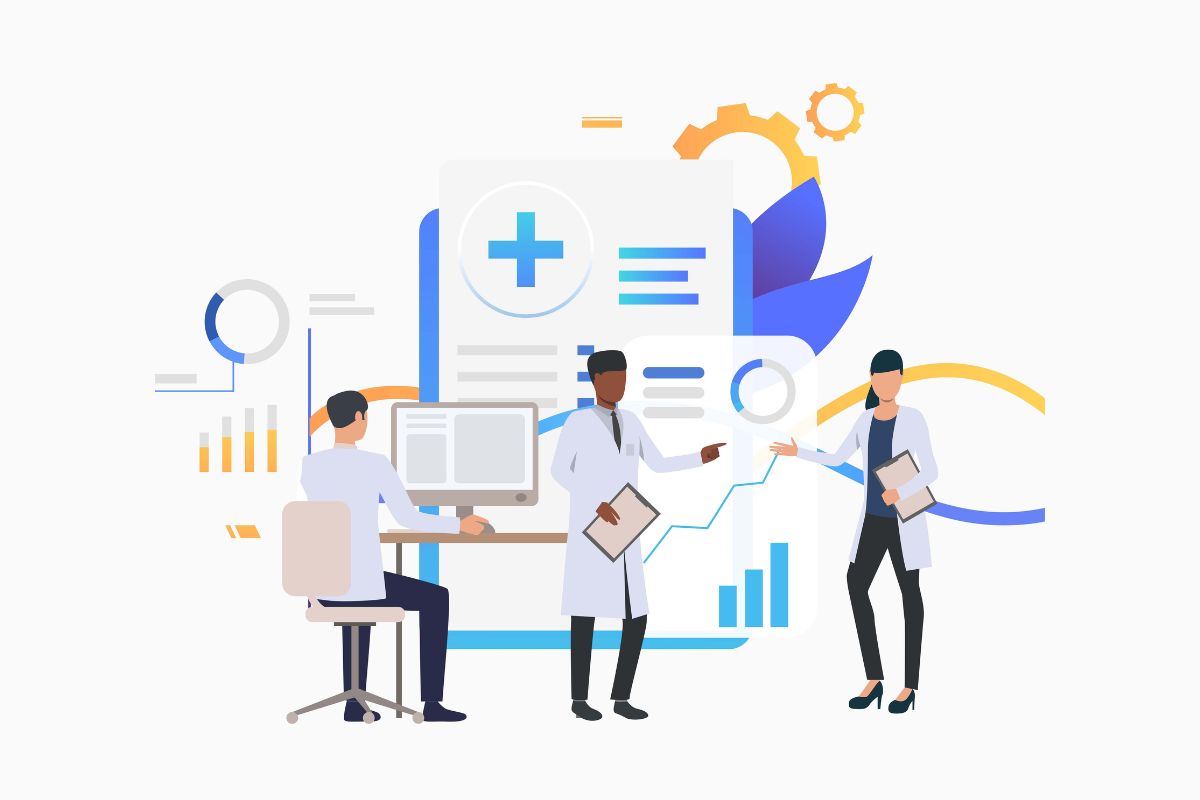
EHR Integration Company: Scalable EHR Software Development & Interoperability
- Kunal Chouhan
- Technology
- 2026-03-01 02:29:18
- 2494K
Introduction
Healthcare organizations are rapidly transforming their digital ecosystems to support data-driven care delivery, regulatory compliance, and patient-centric experiences. At the center of this transformation lies the Electronic Health Record (EHR) system. However, implementing an EHR in isolation is no longer sufficient. Healthcare providers require seamless data exchange across labs, pharmacies, imaging systems, telehealth platforms, billing software, and wearable devices. This is where an EHR integration company plays a critical role.
An EHR integration company not only connects disparate systems but also ensures interoperability, security, scalability, and regulatory alignment. When combined with robust EHR software development, integration becomes a foundation for intelligent, future-ready healthcare infrastructure.
Understanding the Role of an EHR Integration Company
An EHR integration company specializes in enabling interoperability between EHR platforms and other healthcare IT systems. Their responsibilities extend beyond API connections and include:
Interface design and implementation
Data mapping and normalization
Compliance with standards like HL7, FHIR, and DICOM
Secure data transmission
Legacy system modernization
Performance optimization and monitoring
Modern healthcare environments are heterogeneous. Hospitals may use different systems for clinical documentation, revenue cycle management, laboratory operations, and radiology imaging. Without structured integration, data silos compromise clinical decision-making and operational efficiency.
An experienced EHR integration company ensures:
Real-time data exchange
Consistent patient identity resolution
Reduced duplication and manual data entry
Regulatory compliance (HIPAA, GDPR, etc.)
Improved care coordination
Core Interoperability Standards Used in EHR Integration
1. HL7 (Health Level Seven)
HL7 v2.x remains widely used for hospital messaging, including ADT (Admission, Discharge, Transfer), lab results, and orders. It relies on event-driven message exchange using structured segments.
2. FHIR (Fast Healthcare Interoperability Resources)
FHIR is API-driven and RESTful, enabling mobile apps and cloud-based systems to access clinical resources like Patient, Observation, Encounter, and Medication. Modern EHR software development increasingly prioritizes FHIR-first architecture.
3. DICOM
DICOM supports imaging data exchange in radiology and cardiology systems. EHR integration ensures imaging metadata links seamlessly to patient records.
4. CDA and CCD
Clinical Document Architecture and Continuity of Care Documents enable standardized document sharing between healthcare organizations.
A competent EHR integration company designs solutions that combine these standards strategically, depending on workflow and use case requirements.
Technical Architecture of EHR Integration
1. Interface Engine-Based Integration
Interface engines (e.g., Mirth Connect) act as middleware layers that transform and route data between systems. They support message translation, filtering, queuing, and logging.
Advantages:
Centralized management
Scalable interface development
Error handling and monitoring
2. API-Based Microservices Architecture
Modern EHR software development adopts microservices and API-first approaches. Each module (billing, scheduling, lab integration) operates independently but communicates via RESTful APIs.
Benefits include:
Cloud-native scalability
Faster deployment cycles
Easier third-party integration
Improved fault isolation
3. Event-Driven Architecture
Using message brokers like Kafka, systems can process asynchronous healthcare events in real-time, enabling:
Alerts and notifications
Remote patient monitoring data ingestion
Population health analytics
Data Mapping and Normalization
One of the most complex aspects of EHR integration is data mapping. Healthcare data may use different terminologies and code systems, including:
ICD-10 for diagnoses
CPT for procedures
LOINC for lab tests
SNOMED CT for clinical terminology
An EHR integration company implements terminology mapping engines and master data management (MDM) systems to standardize and normalize incoming data. This ensures consistency across the healthcare ecosystem.
Security and Compliance in EHR Integration
Healthcare data is highly sensitive. Integration processes must prioritize security at every layer:
1. Data Encryption
TLS for data in transit
AES-256 for data at rest
2. Access Control
Role-Based Access Control (RBAC)
OAuth 2.0 and OpenID Connect
3. Audit Logging
Activity tracking
Immutable audit trails
4. Regulatory Compliance
HIPAA (US)
GDPR (EU)
Local health data protection regulations
Secure DevOps (DevSecOps) practices are integrated into EHR software development pipelines to ensure continuous compliance validation.
EHR Software Development: Building a Future-Ready Platform
While integration focuses on connectivity, EHR software development addresses core system capabilities. A technically robust EHR includes:
1. Clinical Documentation Module
SOAP notes
Templates and smart forms
Voice-to-text support
2. Computerized Physician Order Entry (CPOE)
Medication orders
Lab and imaging requests
Clinical decision support alerts
3. e-Prescription Module
Drug interaction checks
Real-time pharmacy connectivity
4. Billing and Revenue Cycle Management
Insurance eligibility verification
Claims submission
Payment reconciliation
5. Patient Portal and Mobile Apps
Appointment scheduling
Teleconsultation
Access to health records
When developed alongside integration frameworks, these modules enable seamless healthcare operations.
Cloud Deployment and Scalability
Modern EHR integration companies leverage cloud infrastructure (AWS, Azure, GCP) to provide:
Auto-scaling resources
Disaster recovery and backup
High availability architecture
Load balancing
Containerization using Docker and orchestration via Kubernetes ensures flexibility and resilience. Cloud-native EHR software development allows faster feature deployment and improved uptime.
AI and Analytics Integration
Advanced EHR systems now embed artificial intelligence and predictive analytics:
Risk stratification models
Readmission prediction
Automated clinical coding
NLP-based clinical documentation
Integration with data lakes and business intelligence platforms enables population health management and operational optimization.
An EHR integration company ensures that structured and unstructured data flows seamlessly into analytics engines without compromising security or performance.
Challenges in EHR Integration and Development
Despite technological advancements, several challenges persist:
Legacy systems lacking API support
Data inconsistencies across departments
Vendor lock-in
Performance bottlenecks under high load
Complex regulatory updates
Addressing these requires deep domain expertise, robust testing strategies, and ongoing system monitoring.
Testing and Quality Assurance
Technical excellence in EHR software development demands:
Unit and integration testing
HL7/FHIR validation testing
Load and stress testing
Security penetration testing
Interoperability certification testing
Continuous Integration/Continuous Deployment (CI/CD) pipelines automate testing to reduce production risks.
Best Practices for Selecting an EHR Integration Company
Healthcare organizations should evaluate vendors based on:
Proven interoperability experience
Expertise in HL7 and FHIR
Strong DevSecOps practices
Cloud and microservices capabilities
Regulatory compliance knowledge
Scalable architecture design
A strategic partner ensures not only technical integration but long-term digital transformation alignment.
The Future of EHR Integration and Development
The next generation of healthcare systems will emphasize:
FHIR-first ecosystems
AI-assisted clinical workflows
Interoperability across national health networks
Blockchain-based audit systems
IoT and wearable device integration
An advanced EHR integration company will move beyond system connectivity to deliver intelligent, interoperable health platforms that enable value-based care.
Conclusion
The healthcare industry’s shift toward digitization demands more than standalone electronic health record systems. True transformation occurs when systems communicate seamlessly, securely, and intelligently. An experienced EHR integration company provides the technical expertise to bridge fragmented healthcare IT environments, while comprehensive EHR software development ensures scalable, compliant, and patient-centric platforms.
By combining interoperability standards, cloud-native architectures, security-first development, and analytics-driven capabilities, healthcare organizations can build resilient digital infrastructures ready to support modern care delivery and future innovations.
In a data-driven healthcare era, integration is not an add-on—it is the backbone of intelligent clinical ecosystems.
2494 people like this


About Premium Author
This post has been authored and published by one of our premium contributors, who are experts in their fields. They bring high-quality, well-researched content that adds significant value to our platform.
Leave a Reply
Please login to post a comment.




0 Comments