

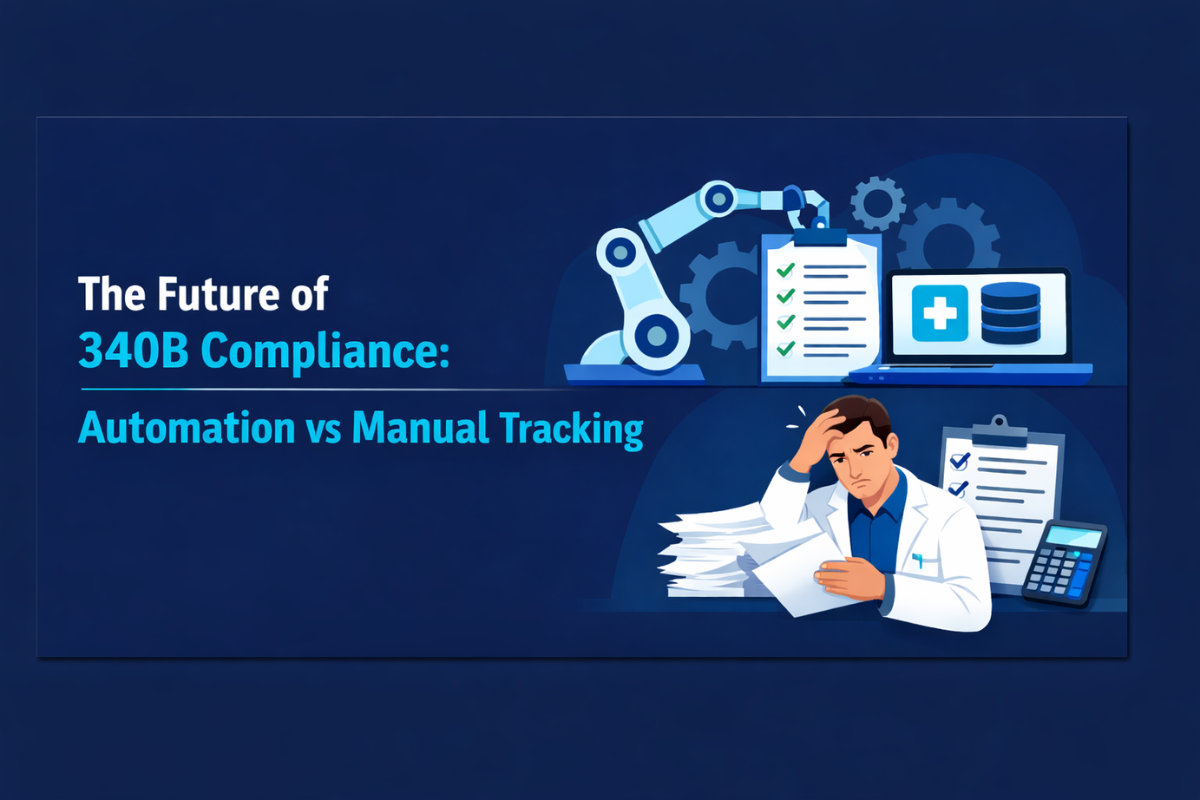
The Future of 340B Compliance: Automation vs Manual Tracking
- Ken Johnsan
- Health
- 2026-02-13 17:14:40
- 2452K
340B compliance is the structured process healthcare organizations use to ensure they meet all eligibility, documentation, and reporting requirements under the 340B Drug Pricing Program. It matters because even minor errors in eligibility calculations, claim tracking, or documentation can lead to HRSA audit findings, repayment demands, or loss of program status. As regulatory scrutiny increases and data complexity grows, healthcare leaders are now asking a critical question: Can manual tracking still support 340B compliance, or is automation the future?
This article provides a clear, expert-level comparison of automation vs. manual tracking in 340B compliance, helping CTOs, compliance officers, and healthcare executives make informed decisions.
What Is 340B Compliance and Why Is It Becoming More Complex?
340B compliance refers to maintaining adherence to federal rules governing eligibility, drug purchasing, claim management, duplicate discount prevention, and audit readiness within the 340B Drug Pricing Program. It is becoming more complex due to increasing regulatory oversight, evolving payer requirements, and multi-location healthcare systems.
Healthcare organizations must manage:
- Patient eligibility verification
- Provider eligibility documentation
- Split billing processes
- Duplicate discount prevention
- Medicaid carve-in/carve-out rules
- DSH percentage accuracy
- Contract pharmacy oversight
- Audit documentation and reporting
The shift toward outpatient expansion, specialty drugs, and value-based reimbursement has significantly increased the volume of claims and compliance checkpoints.
Manual processes that once worked for smaller programs are now under pressure.
Why Is Manual 340B Tracking Still Common?
Manual tracking is still widely used because many organizations began their 340B programs years ago using spreadsheets and internal billing systems. These legacy processes often persist due to:
- Budget constraints
- Resistance to operational change
- Lack of technical leadership
- Limited awareness of automation solutions
- Perceived simplicity of existing workflows
In smaller covered entities, spreadsheets and internal audits may appear sufficient. However, as transaction volume increases, manual tracking introduces risk.
How Does Manual 340B Tracking Typically Work?
Manual 340B tracking relies on spreadsheets, billing system exports, and human verification to monitor eligibility, claims, and documentation.
A typical manual workflow includes:
- Export claims data from billing systems
- Cross-check patient eligibility manually
- Review prescriber eligibility
- Reconcile drug purchasing records
- Identify duplicate discounts
- Prepare audit documentation manually
Each step depends heavily on human review.
What Are the Limitations of Manual Tracking?
Manual systems often struggle with:
- Data inconsistencies
- Delayed reconciliation
- High labor dependency
- Increased human error
- Limited audit traceability
- Scalability challenges
As healthcare systems expand to multiple sites and contract pharmacies, spreadsheets become fragile compliance tools.
What Is 340B Compliance Automation?
340B compliance automation uses specialized software platforms to integrate claims data, purchasing records, and eligibility criteria into a centralized compliance engine. These systems automatically validate claims, flag discrepancies, and maintain audit-ready documentation.
Automation typically includes:
- Real-time eligibility validation
- Automated duplicate discount checks
- Integrated split-billing engines
- Contract pharmacy reconciliation
- DSH monitoring dashboards
- Audit log tracking
Rather than relying on manual cross-checking, automation applies rules consistently across large datasets.
How Does Automation Improve Compliance Accuracy?
Automation improves compliance accuracy by applying standardized logic to every transaction in real time. It reduces reliance on manual interpretation and ensures consistency.
Key Improvements Include:
- Automated rule enforcement
- Continuous data validation
- Real-time alerts for discrepancies
- Standardized audit logs
- Reduced human bias
For example, if a prescriber’s eligibility status changes, an automated system can instantly flag related claims. A manual system may not detect the issue until weeks later.
What Are the Risks of Staying Manual in 2026 and Beyond?
The risks of remaining manual are growing as regulatory scrutiny intensifies.
Key Risks Include:
- Audit findings due to missed duplicate discounts
- Financial clawbacks
- Eligibility miscalculations
- Operational inefficiency
- Delayed corrective action
- Staff burnout
Healthcare leaders must recognize that compliance risk is no longer just administrative — it is financial and reputational.
How Does Automation Support HRSA Audit Readiness?
Automation strengthens audit readiness by maintaining structured, timestamped records of every compliance-related transaction.
Audit Benefits Include:
- Immediate documentation retrieval
- Traceable claim validation history
- Clear duplicate discount prevention records
- Structured reporting outputs
- Centralized data storage
During an audit, automated systems allow compliance teams to generate documentation within minutes rather than reconstructing spreadsheets manually.
What Is the Cost Comparison: Manual vs Automation?
While manual tracking may appear less expensive initially, hidden operational costs accumulate over time.
Manual Costs Include:
- Staff hours for reconciliation
- Overtime during audits
- Error correction efforts
- Revenue leakage from missed captures
- Risk-related financial penalties
Automation Costs Include:
- Software implementation
- Integration setup
- Training
- Ongoing licensing
However, automation often reduces:
- Labor dependency
- Compliance exposure
- Revenue loss
- Administrative overhead
In mid-to-large health systems, automation often becomes cost-neutral or cost-saving within 12–24 months.
Why Are Healthcare CTOs Pushing for Automation?
CTOs recognize that healthcare compliance is increasingly data-driven. As transaction volumes grow, manual oversight becomes unstable.
CTO concerns typically include:
- Data fragmentation
- Security vulnerabilities
- Limited reporting capabilities
- Integration gaps
- Scalability limits
Automation aligns with broader digital transformation initiatives, including interoperability and data governance.
How Does Automation Reduce Revenue Leakage?
Revenue leakage occurs when eligible claims are missed or incorrectly processed.
Automation reduces leakage by:
- Identifying all eligible prescriptions
- Preventing missed split billing opportunities
- Ensuring accurate Medicaid carve-out management
- Detecting errors early
Even small percentage improvements in claim capture can translate into significant revenue protection.
What Are the Implementation Challenges of 340B Automation?
While automation offers advantages, implementation requires careful planning.
Common Challenges Include:
- Data integration complexity
- Change management resistance
- Workflow redesign
- Staff retraining
- Initial configuration errors
Successful implementation requires collaboration between compliance, IT, pharmacy, and finance teams.
How Should Organizations Transition from Manual to Automated Compliance?
Transitioning should be phased and strategic.
Recommended Steps:
- Conduct a compliance gap assessment
- Map current manual workflows
- Identify high-risk pain points
- Evaluate automation vendors
- Pilot implementation in one department
- Train staff and document processes
- Gradually scale across the system
A rushed migration can introduce short-term disruption, so governance is critical.
What Does the Future of 340B Compliance Look Like?
The future of 340B compliance will likely involve:
- AI-assisted compliance monitoring
- Predictive audit risk modeling
- Real-time DSH sensitivity alerts
- Centralized compliance dashboards
- Automated policy updates
Healthcare compliance is moving toward continuous monitoring rather than reactive audits.
Manual spreadsheets will struggle to keep pace with this transformation.
Is Automation Always the Right Choice?
Automation is highly beneficial for medium-to-large covered entities with:
- Multiple contract pharmacies
- High outpatient volumes
- Complex Medicaid billing
- Multi-site health systems
However, smaller organizations with limited transaction volume may still operate manually with strict internal controls.
The decision depends on scale, risk tolerance, and long-term strategy.
What Are the Strategic Benefits Beyond Compliance?
Automation does more than reduce risk. It provides:
- Better financial forecasting
- Clear reporting for executive boards
- Stronger internal controls
- Improved operational transparency
- Faster decision-making
Compliance maturity becomes a competitive advantage rather than a regulatory burden.
Final Thoughts
The future of 340B compliance is not simply about technology adoption — it is about risk management, operational maturity, and financial sustainability. Manual tracking once served the program well, but growing complexity and regulatory oversight demand more resilient systems.
Healthcare leaders must evaluate whether their compliance infrastructure can withstand modern audit scrutiny. In many cases, automation is no longer optional — it is strategic.
Frequently Asked Questions (FAQ)
1. What is the biggest risk of manual 340B tracking?
The biggest risk is human error leading to duplicate discounts, eligibility mistakes, or incomplete audit documentation. These errors can trigger financial penalties or repayment obligations.
2. Does automation eliminate all compliance risk?
No system eliminates risk entirely. However, automation significantly reduces error probability and improves detection speed.
3. How long does 340B automation implementation take?
Implementation typically ranges from 3–9 months depending on system complexity, integration requirements, and internal readiness.
4. Can small hospitals benefit from automation?
Yes, but cost-benefit analysis is important. Smaller entities with limited claim volume may adopt hybrid models.
5. How does automation help with DSH monitoring?
Advanced systems track DSH percentage changes in real time and alert compliance teams if thresholds approach eligibility limits.
6. Is automation required by regulation?
No regulation mandates automation. However, regulators expect accurate, documented, and auditable processes — automation simply makes this easier and more reliable.
2452 people like this



About Premium Author
This post has been authored and published by one of our premium contributors, who are experts in their fields. They bring high-quality, well-researched content that adds significant value to our platform.
Leave a Reply
Please login to post a comment.








0 Comments