

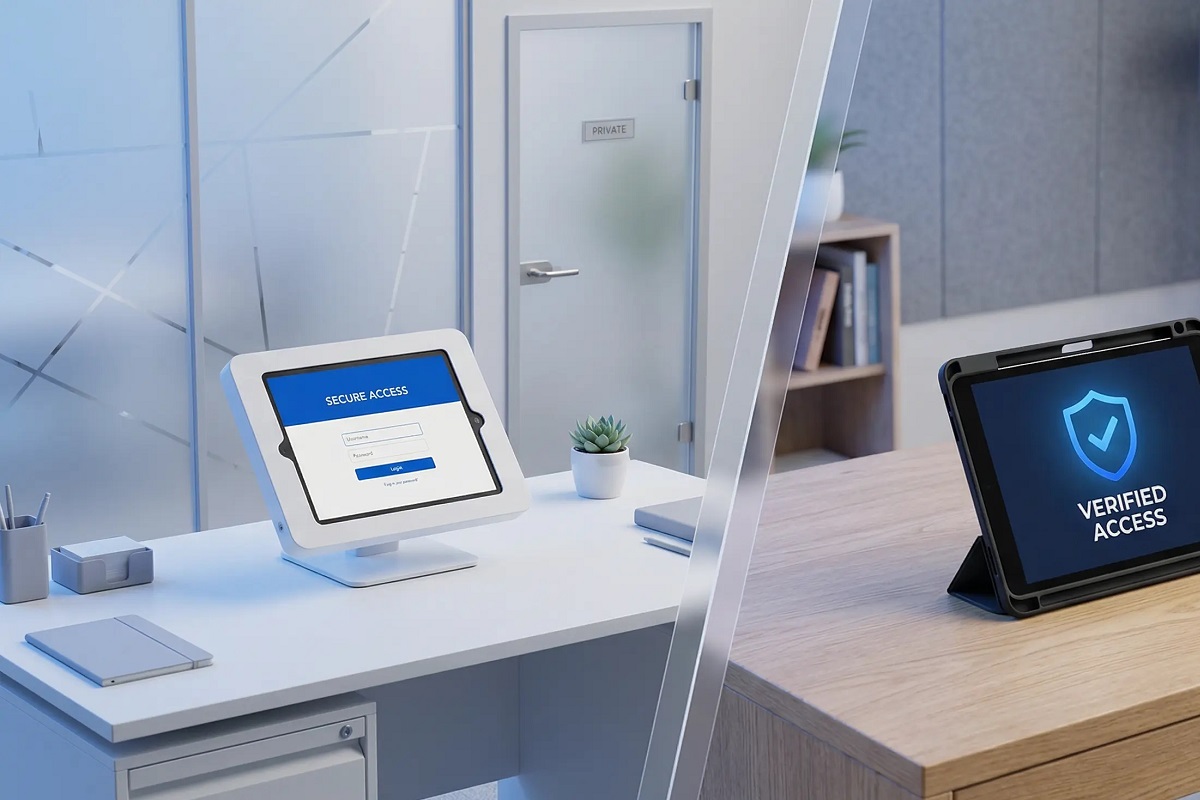
Trustswiftly Ensures Accurate NIST 800-63-4 IAL3 Compliance Verification
- Queangest Queangest
- Technology
- 2026-03-17 17:32:47
- 2570K
Recent attacks targeting defense contractors with ITAR data and critical infrastructure applications highlight the necessity of moving away from remote IAL2 remote identity proofing towards hardware-anchored, supervised IAL3. This will allow organizations to attain FedRAMP High authorization while safeguarding themselves against sophisticated attack vectors.
NIST SP 800-63-4 Digital Identity Guidelines have recently been revised to emphasize phishing-resistant MFA, Passkeys and strong identity management practices. Trustswiftly's authentication solutions quickly align authentication processes with these assurance levels.
IAL3 Verification
Nist ial3 verification is one of the security requirements outlined by the NIST Digital Identity Guidelines, designed to establish three levels of assurance when verifying digital identities. IAL3 requires two authenticators (something physical to have and something digital to be) both of which must be tamper resistant in order to safeguard user's digital identities.
NIST guidelines have undergone significant revisions since their original publication, in response to changing trends, prioritizing stronger authentication protocols that are resistant to widespread phishing attacks in the workplace. Email one-time passwords (OTP) have been downgraded from AAL1 status due to widespread phishing risk while SMS OTP has been considered less secure compared with more robust technologies such as FIDO Certified passwordless Authenticator or biometrics.
Trust Swiftly's full-stack IAL3 solution incorporates a tamper-evident hardware-backed FIDO Certified passwordless authenticator along with live face recognition and biometric monitoring technologies to verify true identity on controlled hardware and stop potential threats from succeeding. We oversee retention schedules and supervise ial3 identity verification software, making nist 800-63-4 ial3 compliance an ongoing risk-based process that enhances security while speeding business transformation. Are you curious to learn how to achieve FedRAMP High authorization using our IAL3-ready zero trust identity architecture? Reach out to us immediately so we can assist in the creation and evaluation of AAL3 requirements while helping avoid common vendor evaluation traps.
IAL3 Compliance
Federal system integrators and prime contractors that depend on remote onboarding of ITAR-controlled technology must reconsider their identity verification frameworks. A recent phishing and hacking attack against an AI-specialized defense contractor from California shows how easily North Korean agents could gain entry to IT positions, obtain corporate devices, and then exfiltrate ITAR-controlled equipment - creating an imminent risk that requires compliance with IAL3.
NIST SP 800-63-4 represents an exciting step toward comprehensive identity risk management that goes beyond checklist-based requirements and towards operationalized frameworks of Zero Trust with continuous verification using hardware authenticators. This new approach to identity risk management seeks to limit highly scalable attacks while safeguarding against synthetic identities, phishing-resistant authentication protocols, etc.
NIST SP 800-63-4 outlines the components of an identity strategy designed to significantly reduce fraud, protect data and enhance user experience. It features modular definitions of IAL, AAL and FAL which favor hardware-anchored authenticators over traditional level of assurance models; organizations may dynamically evaluate threats, service impacts and user populations to select an IAL, AAL and FAL appropriate for their digital identity risk management systems.
Finally, NIST recognizes fedramp high identity proofing methods as viable pathways towards AAL2, while relaxing hardware requirements for AAL3 in order to encourage wider adoption of high-assurance devices. Trustswiftly's compliance with NIST IAL3 standards is the easiest way of meeting them while avoiding false sense of security caused by MFA fatigue or sole reliance on antiphishing hardware tokens alone.
IAL3 Identity Verification Software
NIST Special Publication 800-63-3 Digital Identity Guidelines provide four IALs (Identity Assurance Levels). Each level enumerates the degree to which a claimed identity matches up with its real-world equivalent. While verification methods for levels 1 through 2 rely on physical documents or knowledge-based questions, level 3 calls for cryptographic device-bound authentication such as FIDO security keys or passkeys that provide highly secure protection from man-in-the-middle attacks.
Trustswiftly's FedRAMP-align IAL3 Supervised Remote Identity Proofing solution turns NIST requirements into adaptive, context-aware verification. Boasting biometrics, liveness detection and forensic image analysis - Trustswiftly goes beyond FAL1 and FAL2 assertions to verify users are operating within a trusted execution environment and not exposed to presentations using silicone masks, high resolution screens or AI deepfakes.
Trust Swiftly uses proprietary, tamper-evident hardware to move identity verification events off of claimants' devices and into a trusted execution environment for identity verification events, thus eliminating injection attacks, synthetic media manipulation techniques, spoofing techniques such as silicone masks or AI deepfakes as avenues of attack.
Additionally, a proprietary 3D facial recognition system verifies liveness by comparing real-world faces with those in captured video to detect and prevent any attempts at spoofing attempts. Forensic image analysis also supports these capabilities by detecting forgeries or changes made to official documents such as passports, ID cards or driver's licenses.
2570 people like this



About Premium Author
This post has been authored and published by one of our premium contributors, who are experts in their fields. They bring high-quality, well-researched content that adds significant value to our platform.
Leave a Reply
Please login to post a comment.








0 Comments