

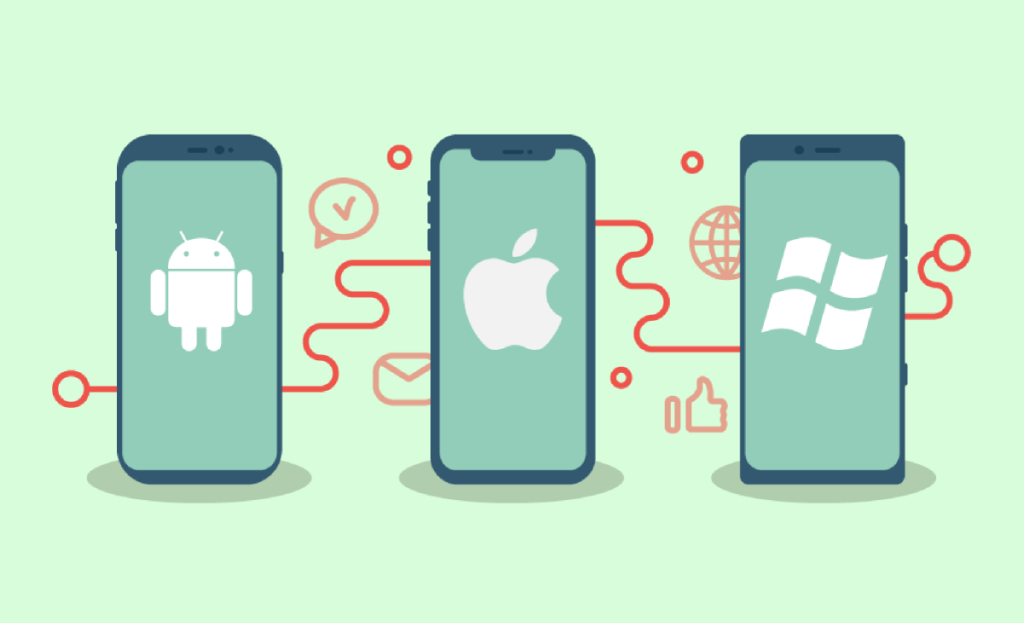
Hybrid vs Cross-Platform Apps: Cost, Performance & Scalability Compared
- Richard Smith
- Technology
- 2026-02-16 13:28:21
- 2457K
The development strategy is one of the most significant choices that businesses make when developing a mobile application. Regardless of whether you are developing an MVP of a startup or an enterprise application, the perception of differences between hybrid and cross-platform mobile app development can directly influence cost, performance, and eventual growth. Our mobile app developers at Designpluz assist businesses in making a strategic and not a technical assessment of the two alternatives.
Understanding Hybrid App Development
Hybrid app development is the creation of applications in web technologies, which are then enclosed in a native container, i.e. HTML, CSS and JavaScript. These applications are implemented within a web view, although they are allowed to access some device features using a plugin.
The hybrid apps are usually selected in cases when the companies want to launch a system more quickly and at a lower cost than cross-platform launching.
Key Characteristics of Hybrid Apps:
- Single-codebase web technologies.
- Faster development cycle
- Lower initial investment
- Appropriate for content-based or basic applications.
- The web rendering engine is dependent on performance.
The hybrid solutions may be perfect where the startup or the business is trying a new idea on a small budget.
Understanding Cross-Platform Mobile App Development
Cross-platform mobile app development involves frameworks such as React Native or Flutter to create mobile apps that run on iOS and Android based on a common codebase. The cross-platform apps use native elements as opposed to hybrid apps, they perform better and offer a smoother experience to the user.
The method provides an equilibrium between the efficiency of the development and the close-to-native performance and is becoming more popular with the current generation of mobile app developers.
Cost Comparison: Which Is More Budget-Friendly?
Businesses are usually thinking in terms of cost.
Hybrid application development usually possesses:
- Reduced initial developmental expenses.
- Faster time-to-market
- Fewer complexities in maintenance.
Cross-platform mobile app development can include:
- A little greater first cost of development.
- Better long-term ROI
- Less significant performance rework required in future.
Although hybrid apps might appear cheaper at first, cross-platform apps can prove to be more valuable when performance and scalability are paramount.
Performance: Speed & User Experience
User retention is also very important based on performance. Hybrid applications are based on web views and can lead to slower loading periods and reduced fluid motions, particularly with complicated applications.
Cross-platform applications, conversely, employ native rendering elements, providing:
- Faster response times
- Smoother animations
- Improved connectedness with device features.
- Better general user experience.
Cross-platform development usually works better in cases where the business needs sophisticated features like real-time updates, a sophisticated user interface or user interaction.
Scalability: Preparing for Future Growth
Strategic planning is needed at the level of scalability. The limitations of hybrid apps might be an obstacle due to the increase in complexity of the application. The other characteristics may add pressure on performance and necessitate restructuring.
The cross-platform mobile app development is more scalable due to the fact that:
- Native components are more efficient in taking up increased workloads.
- Codebase is less difficult to maintain and grow.
- Framework ecosystems are dynamic.
- The performance does not decrease with an increase in the user base.
Cross-platform solutions tend to offer more robust technical bases to businesses planning to expand in the long term.
Which Approach Should You Choose?
This choice implies your business objectives, budget, schedule and technical specifications. Basic applications and fast app development are good with hybrid app development, and growth-based companies can rely on cross-platform mobile app development.
In Designpluz, our mobile app developers evaluate your goals and objectives, user expectations, and future roadmap and then advise on the most appropriate development approach. The correct decision is not a question of fashion; this is all about matching technology with business prosperity.
2457 people like this



About Richard Smith
I am Richard Smith technical content writer and marketing manager.
Leave a Reply
Please login to post a comment.








0 Comments