

What Features Does Invoice Management Software for Construction Include?
- Muhamamd Irfan
- Real Estate
- 2026-09-23 20:21:56
- 2826K
Construction invoicing isn't merely sending bills after the job is done. All projects tend to have several contractors, billing periods, change orders, retainage, approvals and payment schedules. This information can make it hard to track invoices using spreadsheets or individual systems. It is also essential to have accurate records of every project and customer for teams. Hence, construction businesses must have structured billing systems that facilitate the association of invoices with project and payment data, as well as maintain an easy-to-view record.
These items need to be processed centrally with construction billing software. Invoice management software for construction integrates invoice management into a single streamlined process. The main features include invoice generation, status tracking, approval workflows, payment monitoring, file storage, reporting and accounting integration. Progress billing, retainage, change orders, and project-based records are also features that can be managed using construction-focused systems. The features provide better visibility into billing activity and payment records for finance teams.
Why Do Construction Companies Need Invoice Management Software?
Construction Invoices Involve Multiple Project Details
Construction invoices can have content from various areas of a construction project. Contract values, completed work, materials, billing periods, payment terms and customer data may be required. For large projects, there may be multiple invoices over the various phases of the project.
This results in an increased number of records to track in the accounting process and for project teams. A billing system that is centralized maintains all these details related to the right project. Therefore, teams are able to see invoice information without having to look through a number of files.
Manual Invoice Tracking Can Create Record Gaps
Spreading the billings over spreadsheets, emails and shared folders is still the traditional way for many construction companies to complete their billings jobs. Such techniques can cause problems in determining the current status of the last invoice. They can also split the payment info from the invoice that it belongs to.
There is a centralized system that maintains billing records in one workflow. All teams view invoices, approvals, payment and follow-up activity from one place. This will leave you with more clarity of the whole billing process.
Construction Billing Requires Project-Based Tracking
When it comes to construction billing, there are times when it is directly connected to specific projects. A company can work on numerous jobs simultaneously, for various clients and on numerous rates of payment.
Invoices are linked to projects in a project-based tracking approach. Then, teams can check the billings activity, project details, contract amount, and work completed. This way, you'll get greater visibility of your finances on current projects.
What Invoice Management Features Are Used for Construction Billing?
Invoice Creation and Customization
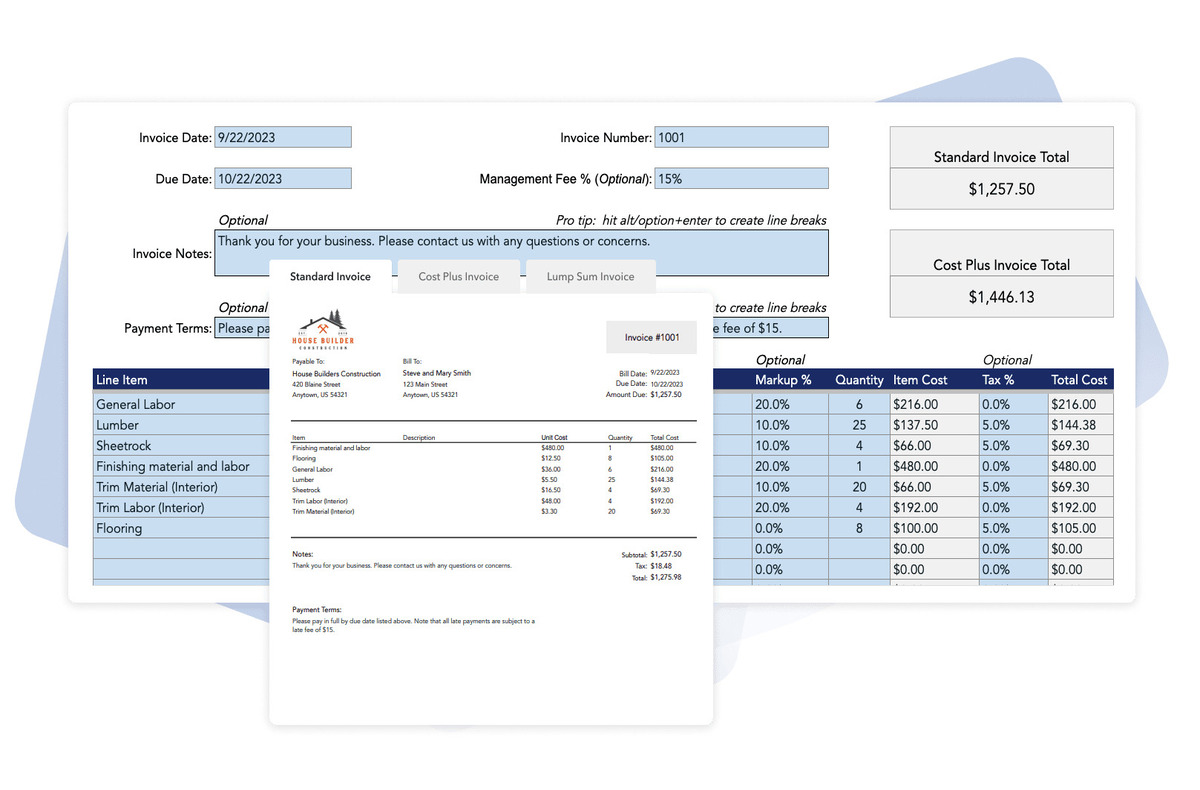
Construction billing software can generate invoices based on information of the project and customers already stored in the system. Line items, quantities, rates, taxes, payment terms and other billing information can be added to teams.
Invoice templates can also ensure uniformity in the format of the invoices across various projects. Specific information can be stored in custom fields that are needed by certain customers or contracts. This minimises duplicate data entry and ensures that all billing records are accurate.
Invoice Status Tracking
The invoice status tracking will let you know the status of each invoice in the billing process. Common statuses include draft, submitted, approved, partially paid, paid, overdue and disputed.
These statuses can help teams to recognize which invoices are pending review and/or payment. An easy-to-use dashboard can also provide accounting personnel with a big-picture perspective of billing transactions throughout
Invoice Approval Workflows
Project managers, accounting personnel or others may need to review construction invoices. The approval workflow allows for pre-submission or pre-payment approval of the invoice to the right person.
The system will be able to track approvals, rejections, comments and requested changes. This will allow us to have a clear record of invoice decisions and minimize confusion between project and accounting teams.
How Does Construction Invoice Software Handle Progress Billing?
Schedule of Values Tracking
A schedule of values is a breakdown of the construction work into billable elements of a contract. These parts can be provided for labor, materials, equipment or various steps of the process.
Programs can link these values to the billings. Teams can then compare amounts scheduled vs work performed and compare to past billings. This helps them to see the progress in billing for their project.
Progress Invoice Management
Progress billing means contractors can bill clients based on their progress. Teams are allowed to do billing based on completed work or agreed milestones, rather than waiting until the project is completed.
The software can be used to take note of billing periods, completed percentages, past billings, and current amounts. Cumulative billing is thus more easily monitored during a project.
Retainage Tracking
The retention is the amount of money that is withheld from the payment until a certain provision of the contract is fulfilled. Construction teams, then, must keep separate records of billed amounts, retained amounts, and released retainage.
These values can be captured by a billing system with the corresponding invoices. This will then enable teams to view how much retainage is still outstanding and how much has been paid.
How Does Invoice Management Software Track Change Orders?
Records Approved Change Orders
Change orders may affect the scope, cost and/or requirements of a project. These changes are important when they influence the billing in the future.
A centralised system can have the information of approved change orders and project finances. This provides accounting and project teams with a common history of changes approved.
Connects Change Orders With Billing
Changes and modifications as stated in "approved change orders" can alter contract values and subsequent contract invoices. Linking them with billing data ensures financial data stays in sync.
For instance, if a project-approved additional scope is entered into the project record before the additional amount is issued as an invoice, it will be visible in the project record prior to the invoice. This goes towards establishing a better link between changes to projects and to billing.
Maintains Change Order History
Order records include dates, values, etc. of orders, description of order, documents associated with order, etc. This information is valuable to project teams to have a history on hand.
Staff can check the "change history" if a question came up later regarding a bill. They don't have to go back through different e-mail messages to see what was different.
How Does It Manage Construction Invoice Documents?
Stores Supporting Documents
Contract, purchase orders, receipts, lien waivers, insurance documents, or progress records are all possible requirements for construction invoices. Having these types of documents in one place can help streamline the process of reviewing invoices.
These records can be stored by a document management feature with the project or in the invoice record. The teams are then able to look for information from other teams without having to browse through individual folders.
Connects Documents With Invoices
When supporting documents are attached to an invoice, it is more thorough and provides a better billing record. The invoice and other documents can be seen by the reviewers in the same workflow.
This can also help to minimize delays resulting from missing paperwork. Provides the information reviewers need when approving an invoice.
Maintains Invoice Records
A dependable system will keep the details of the invoice, notes, approvals, payment info, and other documents. Then teams can take a look at an invoice, from inception to final bill.
When a customer calls up an invoice later, they can use the historical records. Good documentation provides accounting departments with a dependable resource.
How Does Construction Invoice Software Track Payments?
Records Payment Status
Payment tracking provides information about the current payment status of each invoice. There are paid, partially paid, unpaid, and overdue invoices that a system can identify.
This information enables the finance team to recognize accounts for attention. This also helps project managers to have improved visibility on expected payments.
Tracks Outstanding Balances
The system is able to capture the original invoice value, payments made, outstanding balance and payment date. These can be incorporated into teams' records to help track unpaid balances.
This is the feature that will be useful if the customer pays several times for the same invoice. The system can update the balance after each recorded transaction.
Sends Payment Reminders
Responsible teams are always reminded of upcoming and overdue invoices. The system can track previous collections and due dates.
The teams can also see if there were reminders and if the customer responded. This establishes a history of payments that are followed up.
What Accounting and Reporting Features Should It Include?
Accounting Software Integration
Construction companies can have different accounting and construction management systems. Accounting integration will facilitate invoice data being integrated with financial records, and it will stop double data entry.
A connected workflow also provides finance teams with more uniformity of data. Billing information can be transferred between systems to and from teams without having to do it manually.
Accounts Receivable Reporting
The accounts receivable reports include the following features: unpaid invoices, overdue balances, ageing information, and payment activity. The following reports provide finance teams with a wider perspective on outstanding receivables.
Managers can check for overdue accounts and determine payment trends. It also provides a uniform process for reporting on billing activity.
Project Financial Reporting
Project financial reports relate activity in the invoices to specific construction projects. Teams can check the bills, payments, contract values and other financial data.
This perspective is useful when multiple projects are going on concurrently. Managers can monitor the billing activity for any job, and accounting staff can get detailed records of the invoice.
What Should You Look for in Invoice Management Software for Construction?
Construction-Specific Billing Features
The software should be as close to the way the company bills as possible. Features that can be important are project-based invoicing, change order management, retainage tracking, and progress billing.
Construction billing is somewhat different from general business billing. So, businesses must ensure that a platform aligns with their contracts and payment options.
Clear Invoice and Payment Tracking
A helpful system should include invoice status, outstanding balances, invoice payment trends, and ageing information. These records provide businesses with the financial team's firsthand perspective of current receivables.
Important information should also be easily accessible through the interface. A dashboard can provide visibility into unpaid invoices, approvals to be finalized, and recent payment activity.
Integration and Document Management
When a company is already using an accounting or project management platform, integration is important. The system should link the relevant data without having to enter it again and again.
Document management also has a role to play in construction billing. Each team should have the ability to link the contract, approval, payment and supporting documents to their relevant invoice.
Conclusion
The accuracy of your construction billing depends on your ability to keep records on invoices, projects, contracts, payments, and documents. These records are brought into a seamless workflow with invoice management software for construction. Can handle invoice creation, approvals, progress billing, retainage, change orders, tracking payments, reports, and accounting integration. However, each construction company will have its own billing needs. Before choosing a platform, teams should examine their type of project, contract structure, payment systems, and their accounting systems before committing to a platform. The right feature set should be in line with general day-to-day billing processes and be able to maintain project and financial information.
FAQs
What is invoice management software for construction?
Invoice management software for construction is a software system that helps manage construction invoices from generation to payment. It can monitor invoice status, approvals, balances, documents, payment activity, and project billing activities.
What are the features that construction invoice software should provide?
Key functions include invoice generation, tracking, workflow approval, tracking payments, progress billing, retainage management, document management and storage, reporting, and accounting integration.
Does construction invoice software support partial payments?
Yes. Construction invoice software can be used to mark the payment made on an invoice and then total up the remaining invoice amount. This allows finance teams to have an accurate real-time understanding of how much each customer is still owed.
Does invoice management software keep track of construction overdue invoices?
Yes. The system can identify your overdue invoices and sort them by status and/or ageing. Teams can also make notes about reminders or about previous collection activity. ty.
2826 people like this



About Premium Author
This post has been authored and published by one of our premium contributors, who are experts in their fields. They bring high-quality, well-researched content that adds significant value to our platform.
Leave a Reply
Please login to post a comment.







0 Comments