

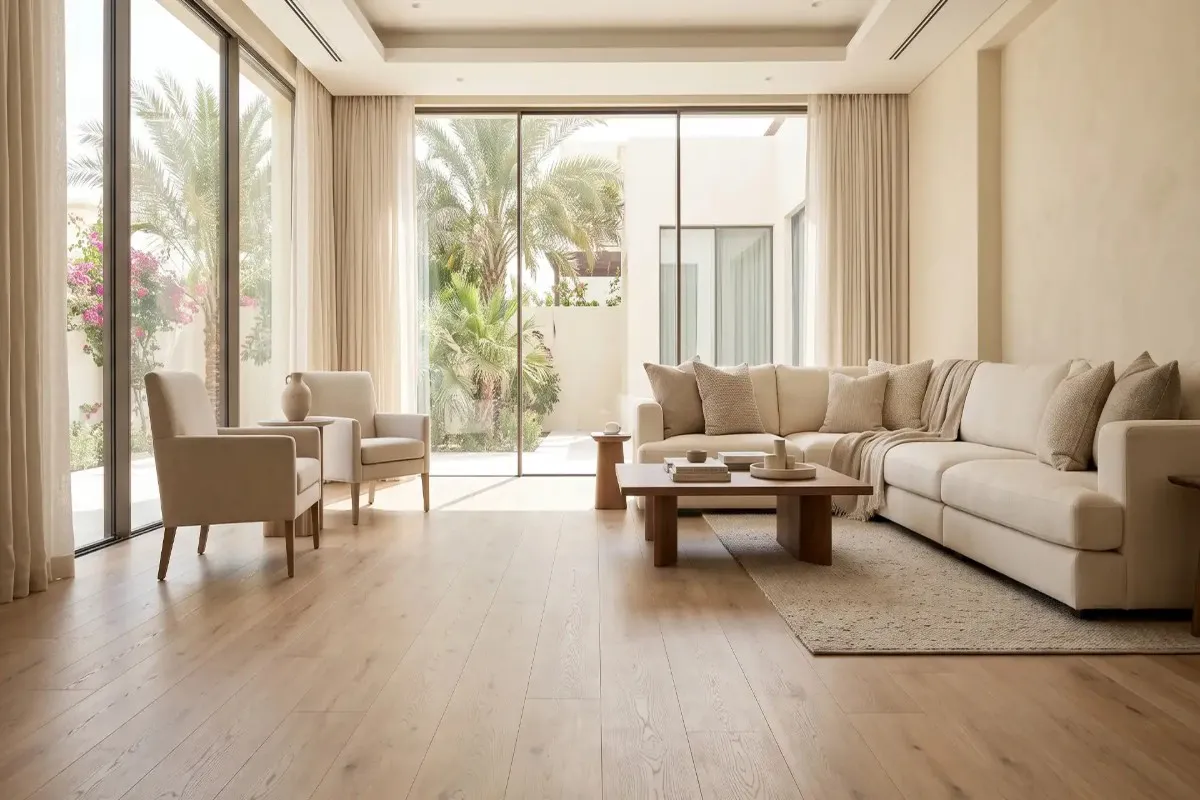
Best Flooring for Living Room Spaces: Durable Options With Real Style
- 10qqayadat online
- Home
- 2026-10-15 02:07:28
- 2833K
Best Flooring for Living Room Spaces: Durable Options With Real Style
The best flooring for living room spaces is the one that suits both daily wear and the way the room should feel. A quiet apartment lounge, a busy family room and a villa opening onto a terrace place different demands on the surface. Start with those demands, then choose the colour and pattern. This makes a more reliable decision than picking a photograph and hoping the material will fit.
Three questions help narrow the options: how much dirt enters, how often spills occur and how much noise matters. The answers provide a useful brief for comparing laminate, vinyl, timber, tile or carpet without assuming one material wins in every home.
Match durability to everyday activities
Look at the routes people actually use. The path from the entrance to the sofa may receive more traffic than the rest of the room, while dining chairs and a desk chair create concentrated wear. Ask suppliers to explain their choice of the best flooring for living room traffic, citing the product's usage rating and required furniture protection.
Collections such as Egger laminate flooring offer a place to compare wood effects, but the appearance does not tell the whole story. Check the exact product's usage class, moisture guidance and fitting requirements. A particular colour name should never stand in for a performance specification.
Balance comfort and living room noise
Hard surfaces can be practical for removing dust, while carpet and rugs bring softness to seating areas. Vinyl, laminate and timber also feel different underfoot, so handle full samples where possible. When comparing the best flooring for living room comfort, test samples with your usual indoor footwear rather than judging them only by touch.
For an apartment, ask about impact sound and the complete floor assembly. Underlay must be compatible with the chosen product, and adding a thicker layer is not automatically an improvement. A rug can reduce echo in a seating area, but it should not be treated as proof that sound transmission to another flat has been resolved.
Choose a palette around fixed finishes
Understanding how flooring affects interior design is especially useful when the room already has permanent elements. Existing stone, kitchen cabinetry and window frames may remain for years, whereas cushions and paint are easier to change. Put floor samples beside those fixed finishes first, then introduce fabric and furniture colours.
Check the samples in daylight and under the lamps used in the evening. A grey board may look cooler beside a cream sofa, while a strong grain can compete with patterned upholstery. Choose which surface should attract attention and let the others support it. A coherent room does not require every wood tone to match exactly.
Practical flooring ideas for small spaces
Useful flooring ideas for small spaces include reducing unnecessary changes of material and keeping the main walking route visually clear. A continuous finish can connect a lounge with its adjoining dining area, although the installation still needs any movement joints or transitions required by the manufacturer.
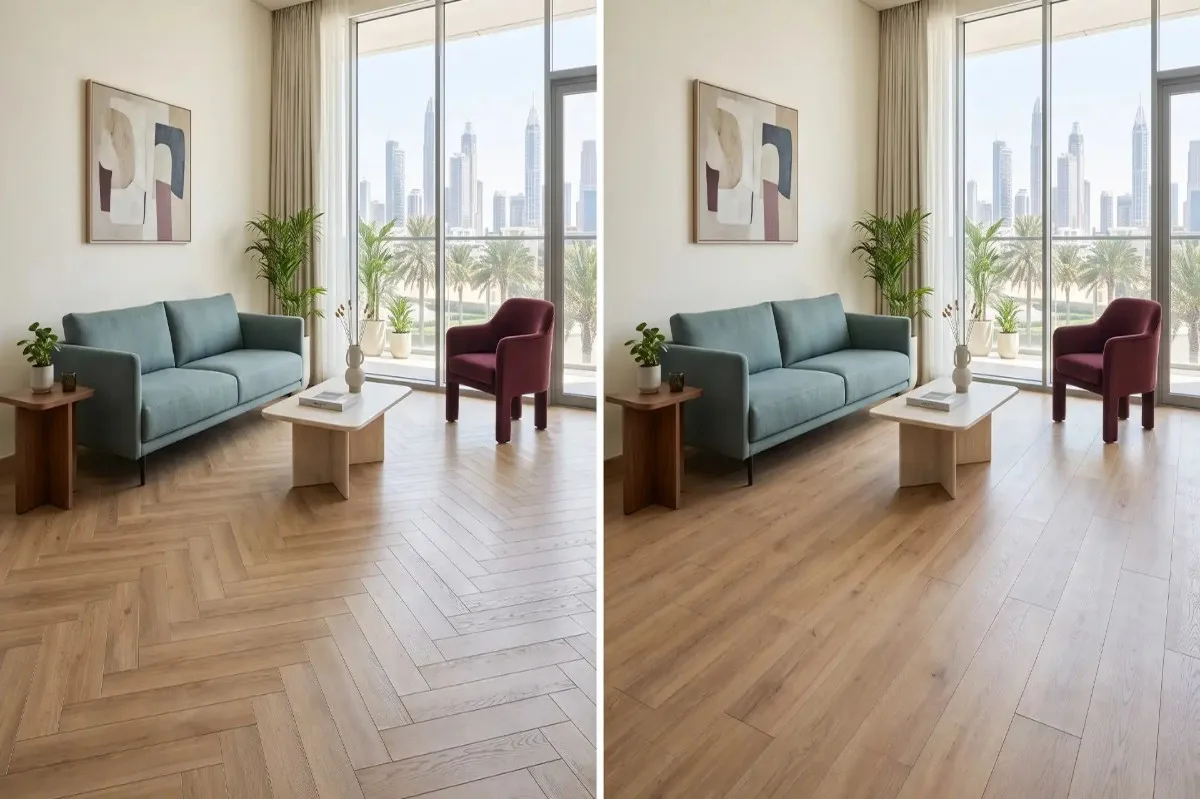
When judging the best flooring for living room layouts, consider plank scale alongside furniture placement. Tape out a few board widths on the floor, then imagine where the rug, sofa and sideboard will sit. This helps reveal whether a dramatic pattern will remain visible or disappear beneath furniture, leaving only awkward fragments around the edges.
Check moisture and sunlight separately
An open-plan kitchen, balcony doorway or frequently watered plant can introduce moisture into a living area. Ask whether the specific product is suitable for that exposure and how edges must be finished. A water resistance claim does not remove the need to wipe up spills or investigate a leak.
Large glazed doors introduce another consideration: direct sunlight and surface temperature. Request the product's guidance for the actual location, including any shading or installation limits. Suppliers such as Floorna list both laminate and vinyl collections, allowing the discussion to begin with a defined range rather than a vague request for a wooden appearance.
Compare the completed room cost
Include preparation, underlay where needed, trims, skirting and fitting in the quotation. Ask who will move heavy furniture and how transitions to neighbouring rooms will be finished. Keep a sample with the agreed product code so the installed material can be checked against the order.
The best flooring for living room use should support ordinary routines as comfortably as it supports the design. A family might favour easy cleaning and a washable rug; a quieter sitting room might prioritise softness. Choose the compromises deliberately, and the result is more likely to remain useful after the initial styling is complete.
2833 people like this



About Premium Author
This post has been authored and published by one of our premium contributors, who are experts in their fields. They bring high-quality, well-researched content that adds significant value to our platform.
Leave a Reply
Please login to post a comment.




0 Comments