

Too Old for Cartoons, Too Young for Instagram: Choosing a Smart Watch for Teens and Tweens
There is a tricky stage between roughly 11 and 14. Your child is taking the metro to coaching, staying back for sports practice and going to friends' homes on their own. They clearly need a way to reach you. But they are not ready for unrestricted social media, and every parent at the school gate seems to have a different opinion on smartphones.
Many families land on a smartwatch as the middle path. The problem is that most kids' watches look like they were designed for seven-year-olds, and a 12-year-old will not be seen dead wearing one. Here is how to choose a smart watch for teens and tweens that is safe enough for you and cool enough for them.
What changes at this age
Independence grows. Tweens travel without parents more often, and the routes become longer and more varied.
Peer opinion matters more. Design, colour and how the watch looks next to friends' gadgets suddenly become important.
Communication shifts. Tweens prefer messages and voice notes over long calls.
Privacy matters. Children this age start wanting some space, and they will resist anything that feels like surveillance.
A good watch for this age respects all four.
Feature checklist for 11-to-14-year-olds
Design they are proud of. Neutral colours, a cleaner interface, and a larger display feel more grown-up than cartoon faces.
Reliable 4G calling and video calling. Over VoLTE on Indian networks, with a clear front camera.
Messaging with approved contacts. Voice messages and family group chat so they can coordinate pickups and plans.
Accurate location for longer routes. Multi-system satellite positioning helps when your teen is commuting through busy areas.
School Mode. Essential for this age, as phones and watches are often a sensitive issue with secondary-school teachers.
No open internet or social media. This is the whole point. The watch covers safety and communication while you delay open internet access.
A battery that lasts a long day. Tween schedules run from early school to late coaching.
Water resistance for sport. If they swim or play outdoor sports, look for a rating that supports it.
How to introduce the watch without a fight
Tweens push back against rules that feel imposed. A few approaches help:
Present it as independence, not monitoring. "This lets you take the metro to coaching on your own" lands far better than "This lets me see where you are."
Agree on the rules together. Write down when location will be checked, who is on the contact list, and when the watch is in School Mode.
Give them some control. Let them choose the colour, watch face, and which friends' parents to add.
Set a review date. Agree to revisit the rules in six months. It shows the watch is a step on a journey, not a permanent restriction.
The smartphone question
Most families are not choosing a watch instead of a phone forever. They are choosing when. A watch can comfortably cover the safety need for a couple of years, giving your child time to build maturity, and giving you time to prepare them for the open internet with conversations about privacy, online behaviour and digital wellbeing.
When the smartphone eventually arrives, children who have had a watch often handle it better. They are already used to rules, check-ins and the idea that devices come with responsibilities.
Red flags in watches marketed to teens
- Watches that include open browsers or app stores "for older kids".
- Cheap Bluetooth watches that only work near a phone, giving a false sense of independence.
- Unbranded products with unclear data practices.
What to look for in practice
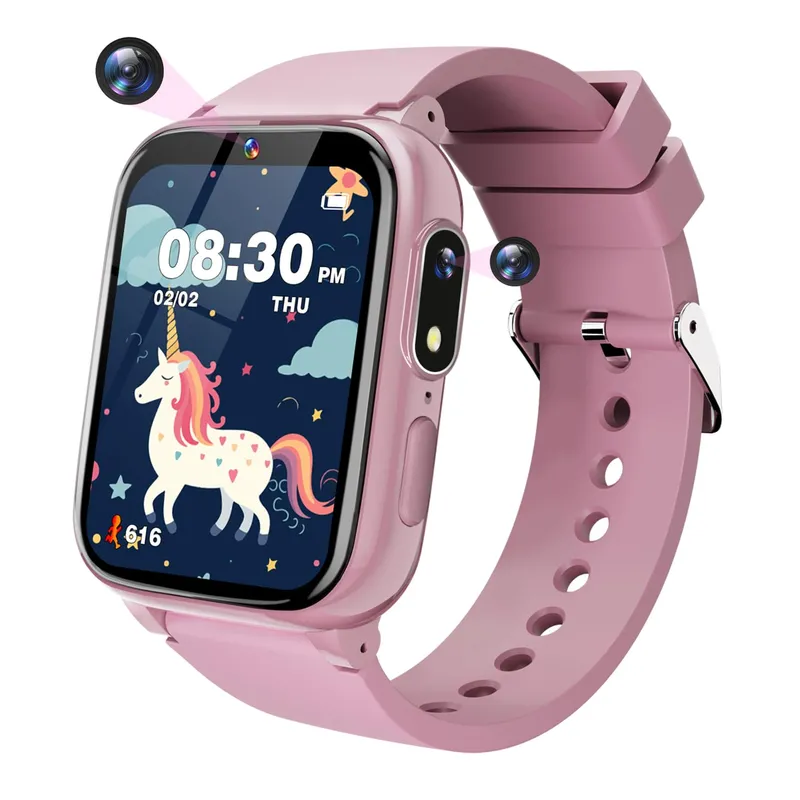
A sensible pick for this age balances a more grown-up design with all the safety basics. imoo focuses entirely on children's watch phones, so it handles the safety side well, with approved-contact calling, stranger-call blocking and no open internet or social media. The imoo Z3 suits older children particularly well as a smart watch for teens: it has a larger 1.5-inch display, cleaner pink and blue designs, HD video calling, multi-system location tracking, 8 GB of storage and 20-metre water resistance for swimming and sport.
The bottom line
Tweens need freedom, and parents need reassurance. The right smartwatch delivers both, as long as it looks good enough to wear and comes with rules everyone agreed on. Treat it as a bridge to the smartphone years, and you may find those years arrive with a lot less drama.
2836 people like this

About Premium Author
This post has been authored and published by one of our premium contributors, who are experts in their fields. They bring high-quality, well-researched content that adds significant value to our platform.
Leave a Reply
Please login to post a comment.





0 Comments