

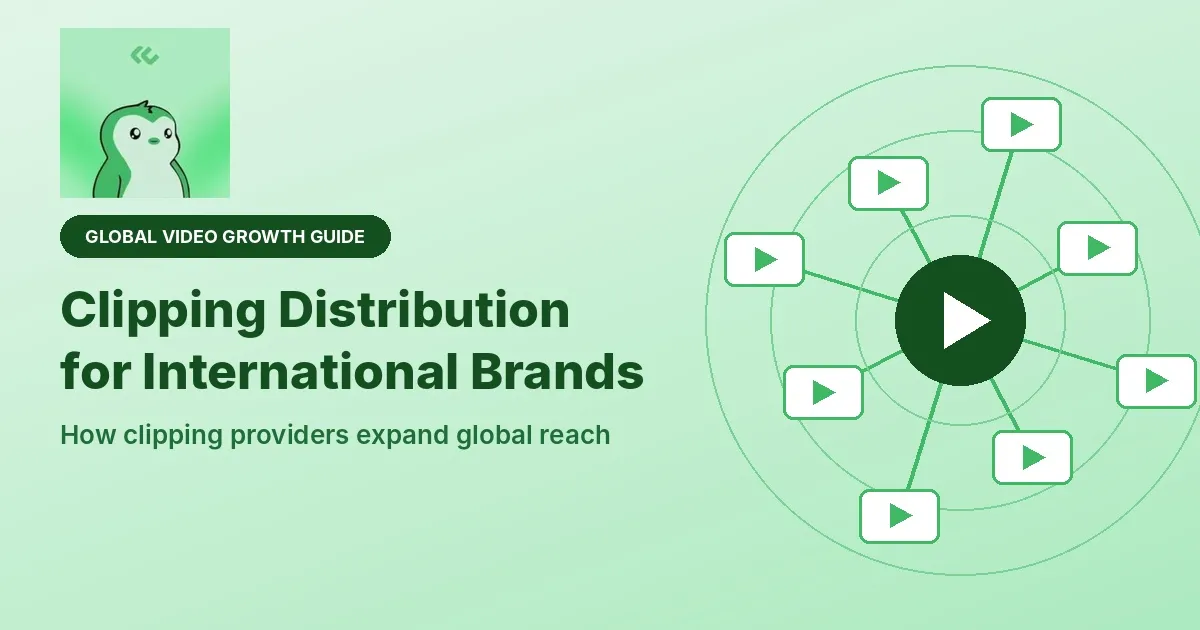
Clipping Distribution: How Providers Boost Global Reach
- riyadh 67
- Social Media
- 2026-11-26 11:28:23
- 2844K
International brands face a simple problem. Great video content exists, yet it rarely travels far enough. Clipping distribution closes that gap by turning long recordings into short, platform-ready clips and placing them in front of the right audiences. In this guide, you will learn how clipping distribution works, why global teams rely on it, and how clipping providers expand reach across borders.
After two decades in digital content, I have watched formats come and go. However, one lesson has never changed. Attention is earned in seconds, and distribution decides who gets seen. Short clips now carry that weight on almost every major platform.
What Is Clipping Distribution?
Clipping distribution is the process of cutting long-form videos into short highlights and publishing them across many channels. A podcast episode, a livestream, or a conference talk becomes dozens of small assets. Each asset is then shared where its audience already spends time.
The process has two parts. First, editors find the strongest moments, such as a bold claim or a useful tip. Second, distribution specialists format, caption, and publish those moments on the right platforms at the right time.
Many teams confuse clipping with simple editing. Editing only creates the clip. Distribution moves it, measures it, and improves it. That difference is why clipping distribution has become a core part of modern video strategy.
Why International Brands Need Clipping Distribution
Global audiences do not behave alike. A viewer in Dubai scrolls at different hours than a viewer in Toronto. Likewise, a short video that works in Brazil may fall flat in Japan. Brands that publish one asset everywhere usually see weak results.
Clipping distribution fixes this mismatch. Instead of one long video, a brand gets many small pieces. Each piece can be tested, localized, and scheduled for a specific region.
Consider the numbers behind the trend. Short-form video now ranks among the most engaging formats on social media, according to several industry surveys. Moreover, viewers often watch clips with the sound off, so captions matter. A well-built clip respects both habits. For that reason, clipping distribution suits international audiences better than a single, long upload.
Cost also plays a role. Producing new videos for every market is expensive. Reusing existing footage is far cheaper. As a result, many international teams adopt clipping marketing to stretch one production budget across ten markets.
How Clipping Providers Expand Global Reach
Clipping providers do more than cut footage. Their value lies in the systems built around the cut. Below are the main ways they help brands grow beyond a single region.
1. Localization Beyond Translation
Translation is only the first step. Experienced clipping providers also adapt tone, idioms, and cultural references. For example, a joke that lands in London may confuse an audience in Seoul.
Therefore, strong teams add native-language captions, adjust hooks, and choose thumbnails that fit local taste. This work builds trust, and trust drives watch time.
2. Platform-Specific Formatting
Every platform has its own rules. Vertical video suits TikTok, Instagram Reels, and YouTube Shorts. Meanwhile, X and LinkedIn often reward slightly longer, captioned clips with a clear message.
A reliable clipping agency keeps a format library for each channel. Aspect ratio, caption style, and clip length all follow platform norms. Consequently, the content feels native rather than recycled.
3. Creator and Community Networks
Reach grows faster when real people share the clips. Many clipping providers manage networks of independent clippers who post content on their own accounts. Because these accounts have genuine followers, the clips feel organic.
This model works especially well across languages. A clipper in Turkey, for instance, reaches Turkish-speaking viewers more naturally than a central brand account ever could.
4. Time-Zone Scheduling
Timing shapes performance. Posting at 9 a.m. in New York means little to an audience in Singapore. Therefore, clipping distribution plans usually include region-based calendars.
Providers schedule clips in waves. One wave targets Asia, another targets Europe, and a third targets the Americas. This approach keeps a brand visible around the clock.
5. Data-Driven Optimization
Finally, providers track what works. They compare hooks, lengths, captions, and posting times. Then they repeat the winners and retire the losers.
This feedback loop is where experience shows. A new team guesses. A seasoned team reads the data, adjusts quickly, and compounds gains over months.
Clipping Marketing in Crypto and Web3
Crypto video marketing is one of the fastest-growing uses of clipping. Blockchain projects publish long founder talks, community calls, and technical walkthroughs. Most viewers will never watch an hour-long recording. Short clips make that knowledge accessible.
Web3 content distribution also depends on speed. Market conversations move in hours, not weeks. A clip posted soon after a major announcement can shape the narrative while interest is high.
In addition, crypto creator campaigns often reward clippers based on views or engagement. This structure encourages many voices to share the same message in different languages. Blockchain video clipping, therefore, supports both awareness and community education.
Trust is critical in this space. Accurate captions, clear context, and honest framing protect a project from misinformation. Providers that skip these steps risk damaging the brand they serve.
Practical Examples From Real Content Formats
Theory helps, but examples show the process clearly. Here are five formats where clipping distribution performs well.
- Podcasts: A 90-minute episode can yield 15 to 25 clips. Each clip highlights one idea, one story, or one surprising fact.
- X Spaces: Live audio discussions disappear quickly. Clipping preserves the best moments and gives them a second life as captioned video.
- Livestreams: Product launches and gaming streams contain short bursts of excitement. Clips capture those peaks for viewers who missed the event.
- AMAs: Questions and answers convert neatly into short clips. Each answer solves a specific problem, so it stands alone.
- Founder interviews: Leaders share vision and lessons in long conversations. Short excerpts turn that wisdom into shareable thought leadership.
In each case, the workflow is similar. Editors select moments, designers add captions, and distributors publish by region. Afterward, analysts review the results and refine the next batch.
Building a Global Clipping Distribution Workflow
A repeatable workflow keeps quality high as volume grows. Most seasoned teams follow five steps.
First, they set a goal for each market. One region may need awareness, while another needs sign-ups. Next, they choose source content and mark the strongest moments. After that, editors cut, caption, and localize each clip.
Then comes publishing. Clips go live in waves, based on regional peak hours. Finally, analysts review performance and share lessons with the whole team.
This structure matters because the best clipping distribution is rarely accidental. It comes from clear roles, simple checklists, and steady reviews. Likewise, the best clipping marketing programs document every step, so new team members can follow the same standard from day one.
Moreover, a shared content calendar prevents overlap. Without it, two regions may post similar clips on the same day. That wastes effort and confuses followers who follow several accounts.
Clipping Agency, Clipping Company, and Clipping Services: What Is the Difference?
People often use these terms interchangeably. Still, small differences exist.
A clipping agency usually offers strategy along with execution. It plans campaigns, manages creators, and reports on results. A clipping company may focus on production at scale, with a larger team and standardized processes. Clipping services, on the other hand, describe the tasks themselves, such as clip selection, captioning, and publishing.
Understanding this difference helps buyers set clear expectations. A brand that needs full campaign management should look for an agency model. A brand that only needs editing capacity may prefer a simpler service package.
How to Choose the Best Clipping Providers
Searching for the best clipping agency or the best clipping company can feel overwhelming. Rankings change, and claims are easy to make. Instead, evaluate providers using practical criteria.
- Proven results: Ask for case studies with measurable outcomes, such as views, watch time, or follower growth.
- Language coverage: Confirm that the team can handle your target markets, not just English.
- Platform expertise: Check whether the provider understands each channel's current rules.
- Transparent reporting: Good clipping providers share clear dashboards and regular updates.
- Quality control: Look for a review process that catches errors before publishing.
- Ethical practices: Avoid any provider that buys fake views or uses misleading edits.
The best clipping providers and the best clipping services combine speed with accuracy. They also communicate openly. If a provider cannot explain its process in plain language, that is a warning sign.
Common Mistakes in Clipping Distribution
Even strong brands make avoidable errors in clipping distribution. Fortunately, most of them are easy to fix. Here are the most frequent ones.
First, many teams chase volume over quality. Posting fifty weak clips rarely beats posting ten excellent ones. Second, some brands ignore context, which leads to clips that mislead viewers. Third, teams forget to test hooks. The first three seconds decide whether anyone keeps watching.
Another common mistake involves inconsistent branding. When captions, fonts, and colors change every week, audiences struggle to recognize the source. A simple style guide solves this problem.
Lastly, brands often skip measurement. Without data, no one knows which clips drive results. Regular reviews turn guesswork into strategy.
Key Metrics to Track
Strong clipping distribution depends on clear metrics. Start with these:
- View-through rate: It shows how many viewers watch most of a clip.
- Engagement rate: Likes, comments, shares, and saves reveal real interest.
- Reach by region: This metric confirms whether localization works.
- Follower growth: Steady gains show lasting brand impact.
- Click-through rate: It measures how many viewers move toward a next step.
Track these numbers weekly. Then compare them across markets and formats.
Trends Shaping the Future of Clipping Marketing
Several trends will define the next few years. First, AI-assisted editing is speeding up clip selection. Even so, human judgment remains vital for context and tone. Second, automatic multilingual dubbing is improving, which makes global reach easier. Third, search engines now surface short videos directly in results, so well-optimized captions and titles carry more weight.
In short, clipping distribution will keep growing as short video dominates feeds worldwide. Meanwhile, audiences are becoming more selective. They reward authenticity and punish clickbait. As a result, the best clipping marketing will focus on honest, useful highlights rather than shock value.
Final Thoughts
Clipping distribution has moved from a side tactic to a central growth channel. It helps international brands turn one recording into many conversations across languages, platforms, and time zones. The brands that succeed treat it as a system built on localization, timing, quality, and measurement.
If you want to explore this approach, begin with one content format and one target region. Test, measure, and expand step by step. Experts at Lumina Clippers have seen that steady, well-planned clipping distribution builds more lasting reach than any single viral post.
2844 people like this


About Premium Author
This post has been authored and published by one of our premium contributors, who are experts in their fields. They bring high-quality, well-researched content that adds significant value to our platform.
Leave a Reply
Please login to post a comment.




0 Comments