

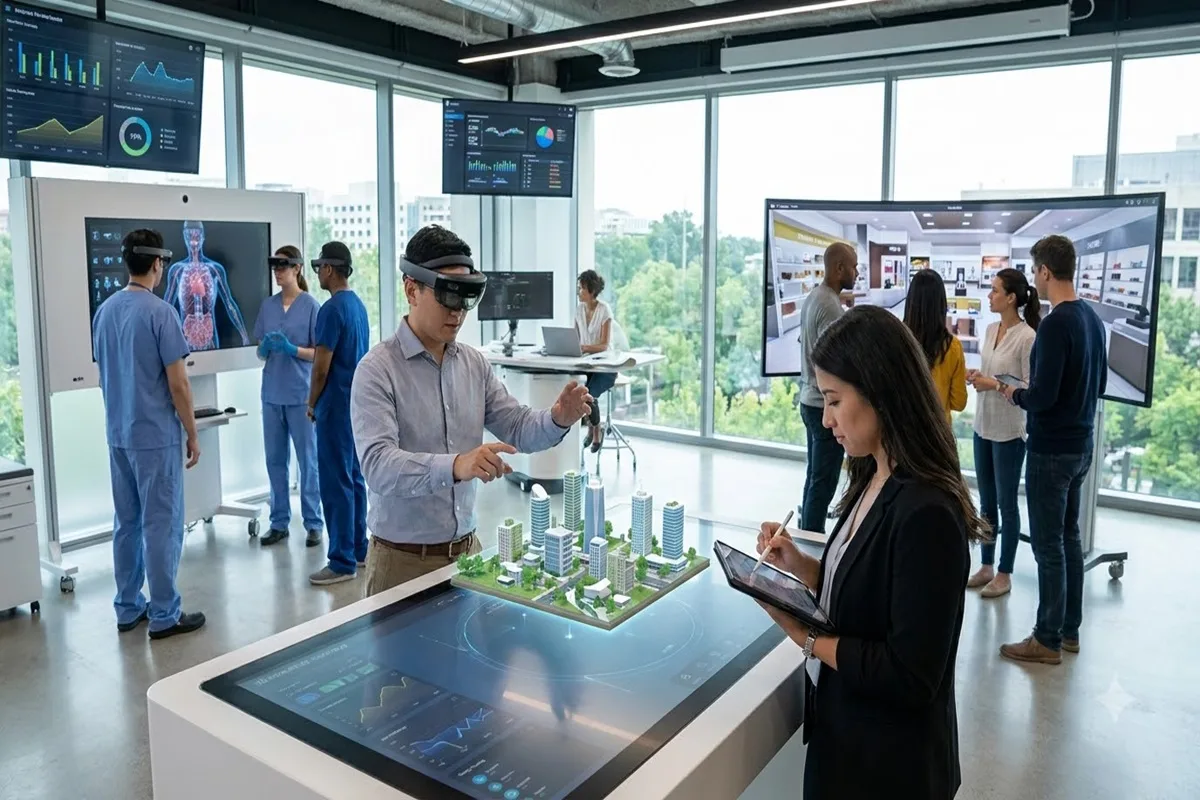
The Future of Digital Experiences & Immersive Technology
- ViitorX Studio
- Technology
- 2026-08-06 18:22:30
- 2764K
The digital landscape is undergoing a monumental shift. For decades, our interaction with technology has been confined to flat, two-dimensional screens. Today, however, the boundaries between the physical and digital worlds are blurring, giving rise to incredibly interactive and immersive environments. This evolution is driven by groundbreaking advancements in Augmented Reality (AR), Virtual Reality (VR), and holographic technologies. Leading this digital revolution are innovative studios like ViitorX, which specialize in engineering immersive experience centers, interactive museum designs, and captivating digital storytelling systems. As businesses and cultural institutions look for new ways to captivate their audiences, the transition from passive observation to active participation has become not just a trend, but a necessity. In this article, we will explore how immersive technology is reshaping various industries and why embracing digital experiences is crucial for future success.
Understanding the Scope of Immersive Technology
To comprehend the impact of digital experiences, we must first look at the core technologies powering them. Immersive technology encompasses a broad spectrum of digital tools that simulate the real world or enhance it with digital overlays.
- Virtual Reality (VR): Completely immerses the user in a digitally generated environment, blocking out the physical world.
- Augmented Reality (AR): Overlays digital information—such as images, sounds, or text—onto the real world, enhancing the user’s immediate surroundings.
- Holography and Projection Mapping: Projects 3D images and animations into physical spaces, often without the need for specialized eyewear, creating shared communal experiences.
Together, these technologies are moving digital interaction from a solitary, screen-bound activity into a dynamic, spatial, and multisensory experience. They allow users to step inside ideas, explore complex environments, and engage with content in ways that were previously unimaginable.
Key Sectors Transformed by Digital Experiences
The application of immersive technology is vast, touching almost every sector of the modern economy. Let us look closely at how specific industries are leveraging these tools to drive engagement and innovation.
Museums, Heritage, and Cultural Institutions
Traditionally, museums and cultural centers have relied on static exhibits to educate the public. Immersive technology is completely redefining this dynamic. Through interactive museum design and digital museum installations, institutions can now bring ancient history and intricate collections to life. For example, holographic digital twins can recreate lost artifacts, while VR tours can transport visitors to archaeological sites thousands of miles away. This not only protects delicate heritage artifacts from physical wear and tear but also democratizes access to culture, turning public spaces into highly desirable tourist destinations.
Corporate Enterprises and Brand Activations
In the highly competitive business landscape, capturing consumer attention is more challenging than ever. Immersive tech offers a powerful solution through experiential marketing. Brands are increasingly utilizing 3D exhibition stall designs and immersive brand activations for product launches and global expos. Instead of handing out brochures, a company can use AR to let a consumer visualize a product in their own home, or utilize VR to take stakeholders on a virtual tour of a soon-to-be-built facility. These immersive moments help corporate brands earn trust, forge emotional connections, and create memorable experiences that traditional advertising simply cannot match.
Education and Simulation-Based Learning
The education and training sectors are experiencing a renaissance thanks to immersive digital experiences. Simulation-based learning powered by VR allows students and professionals to practice complex tasks safely. Whether it is a medical student performing a virtual surgery, an aviation trainee navigating a simulated cockpit, or industrial workers learning to operate heavy machinery, VR training provides hands-on experience without the cost, logistical challenges, or physical risks associated with real-world equipment. This hyper-realistic training leads to better knowledge retention and a higher level of preparedness.
The Power of Holographic Displays and Projection Mapping
While VR and AR often require personal devices like headsets or smartphones, holography and projection mapping offer a different kind of magic: communal awe. By using advanced 3D holograms and holographic projection systems, creators can transform ordinary physical spaces into captivating visual spectacles.
Projection mapping, for instance, can turn the facade of a historic building into a moving canvas, telling a story through light and motion. In experience center design, these technologies are used to create "wow" moments that draw visitors in. Because these experiences can be shared simultaneously by a large group of people without wearable tech, they are incredibly effective for public showcases, government tourism initiatives, and large-scale cultural events.
The Shift Towards 3D Web Design and Virtual Environments
The internet itself is evolving to become more spatial. Traditional web design is gradually making way for immersive 3D website design. These immersive web environments use motion, real-time interaction, and spatial audio to create digital spaces that feel more like physical locations than traditional webpages.
For businesses, this means the digital storefront is no longer just a catalog; it is an experience center. Customers can navigate through digital showrooms, interact with 3D product models, and even engage with conversational AI avatars. This level of interaction not only boosts user engagement but also provides businesses with valuable, real-time data on consumer behavior and preferences.
Why Businesses Must Embrace the Immersive Future
The integration of immersive technology is no longer an optional upgrade; it is rapidly becoming a standard expectation. Consumers and clients alike are seeking experiences that engage, measure, and scale. They want to be active participants in the stories brands and institutions tell.
By investing in digital storytelling systems, virtual reality development, and interactive environments, organizations can future-proof their operations. The ability to turn a simple idea into a space that people can literally step into is a profound competitive advantage. It bridges the gap between digital convenience and physical presence, creating a hybrid ecosystem that is the hallmark of the modern digital age.
Overcoming Challenges and Looking Ahead
Of course, the transition to immersive technologies comes with challenges. High development costs, the need for specialized engineering talent, and hardware limitations can be hurdles for some organizations. However, as the underlying technology becomes more accessible and cost-effective, these barriers are rapidly diminishing. Partnering with specialized digital experience studios is often the most effective way for businesses to navigate this complex landscape, ensuring that the technology serves the core message rather than overshadowing it.
Conclusion
The future of digital experiences is undeniably immersive. From revolutionizing how we preserve and interact with cultural heritage to transforming corporate marketing and professional training, AR, VR, and holography are reshaping the world around us. Innovative studios are proving that the digital realm can be just as engaging, emotional, and impactful as the physical world. As these technologies continue to mature, the organizations that will thrive are those that recognize the power of spatial computing and actively work to turn their ideas into immersive realities. The era of flat digital interaction is fading, and the age of the immersive experience has officially arrived.
2764 people like this



About Premium Author
This post has been authored and published by one of our premium contributors, who are experts in their fields. They bring high-quality, well-researched content that adds significant value to our platform.
Leave a Reply
Please login to post a comment.







0 Comments