

Fenbendazole Dosage for Cats by Weight: Complete Guide
- john levish
- Health
- 2026-08-19 15:59:18
- 2799K
Fenbendazole is an antiparasitic medicine used in veterinary medicine to treat certain parasitic infections. For cats, the appropriate amount depends on body weight, the parasite being treated, the formulation, and the veterinarian’s treatment plan. A weight-based approach can help explain how dosing is calculated, but it should not replace professional veterinary advice.
Merck Veterinary Manual lists fenbendazole as one treatment option for several feline intestinal parasites. It also notes that some fenbendazole regimens in cats are extra-label, meaning they are not specifically approved for that particular use in cats.
Is Fenbendazole Safe for Cats?
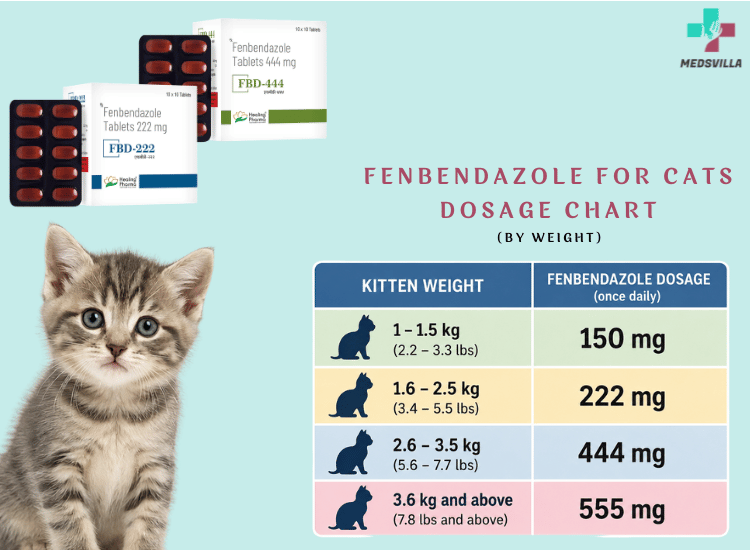
Fenbendazole can be used in cats under appropriate veterinary circumstances. The FDA states that several approved fenbendazole products can be used in cats either according to their labeling or in an extra-label manner when directed by a veterinarian. Fenbendazole for cats dosage chart by weight can help explain weight-based dosing considerations.
However, this does not mean every fenbendazole product is automatically appropriate for every cat. Veterinary products may have different strengths, formulations, and labeled species.
Before giving fenbendazole, a veterinarian should determine what parasite is causing the problem and whether fenbendazole is the appropriate treatment.
Fenbendazole Dosage for Cats by Weight
A commonly referenced veterinary regimen for certain feline parasites is 50 mg/kg by mouth once daily for 3–5 days. Merck Veterinary Manual lists this type of regimen for certain roundworm, hookworm, and Giardia treatment situations.
The following chart shows the calculated amount at 50 mg/kg for illustration:
| Cat's weight | Amount at 50 mg/kg |
|---|---|
| 1 kg | 50 mg |
| 2 kg | 100 mg |
| 3 kg | 150 mg |
| 4 kg | 200 mg |
| 5 kg | 250 mg |
| 6 kg | 300 mg |
| 7 kg | 350 mg |
| 8 kg | 400 mg |
| 9 kg | 450 mg |
| 10 kg | 500 mg |
Important: This is a mathematical weight-based example, not a universal prescription. Fenbendazole dosing varies by parasite and treatment purpose. Merck specifically notes that some feline regimens are not approved for cats, so a veterinarian should determine whether this dose and duration are appropriate.
How Is the Dose Calculated?
Weight-based dosing is calculated by multiplying the cat’s body weight in kilograms by the prescribed number of milligrams per kilogram.
For example, if a veterinarian recommends 50 mg/kg for a particular condition, a 4-kg cat would correspond to 200 mg:
4 kg × 50 mg/kg = 200 mg
This calculation gives the amount of active ingredient, not necessarily the amount of paste, suspension, powder, or tablet to administer.
The product concentration must be checked before measuring the actual dose.
Why the Product Strength Matters
Fenbendazole products can come in different formulations and concentrations. A tablet, liquid, granule, or paste may contain different amounts of active ingredient.
For this reason, simply knowing a cat’s weight is not enough to determine how much of a particular product should be given.
For example, two products could contain different amounts of fenbendazole per gram. Giving the same volume or spoonful of each product could therefore result in very different doses.
The FDA notes that when a different dosage form or strength of fenbendazole is necessary, a patient-specific prescription may be appropriate under veterinary direction.
What Parasites Can Fenbendazole Treat?
Fenbendazole is active against several types of parasitic worms. Merck's feline parasite information lists fenbendazole among treatments for certain Toxocara, Toxascaris, Ancylostoma, Uncinaria, and Taenia infections, depending on the specific product and country.
It can also be used in certain situations involving Giardia. Merck Veterinary Manual lists fenbendazole at 50 mg/kg orally every 24 hours for 3–5 days as a treatment option, while noting that no drugs are approved for Giardia treatment in dogs and cats in the United States.
The correct medicine depends on the parasite. Fenbendazole is not a universal treatment for every infection that can affect cats.
Fenbendazole for Kittens
Kittens require additional care because they are small, developing animals and may be more vulnerable to dehydration and complications from parasitic infections.
Merck's shelter-medicine guidance includes fenbendazole among commonly used treatments for certain intestinal worms in cats and kittens, but treatment should still be based on the animal's condition and the parasite involved.
Do not estimate a kitten's weight or use an adult cat's dose without veterinary guidance. Even a small measurement error can produce a substantially different dose in a very small animal.
What If Your Cat Has Lungworms?
Fenbendazole is also listed as one treatment option for certain feline lungworm infections. Merck Veterinary Manual reports 50 mg/kg orally for 2–5 days for Aelurostrongylus abstrusus, while noting that some recommendations may be based on limited evidence or constitute extra-label use.
Respiratory symptoms such as coughing or rapid breathing should not automatically be treated as lungworms. A veterinarian may need to perform diagnostic testing before selecting treatment.
What About Fenbendazole and Ivermectin Tablets Price?
People searching for fenbendazole and ivermectin tablets price may encounter products marketed for animals or humans. Price should not determine which medication is given to a cat.
Check the active ingredients, concentration, intended species, expiration date, and veterinary directions. A lower-priced product may not contain the formulation or strength required for your cat.
What About Ivermectin and Fenbendazole Pills for Humans?
Searches for ivermectin and fenbendazole pills for humans are separate from veterinary dosing questions. Human medicines should not be substituted for veterinary products unless a veterinarian specifically determines that an appropriate human medicine can be used in an animal.
The FDA's guidance on fenbendazole recognizes veterinary use and extra-label use under veterinary oversight.
Never give a cat a human medication based solely on an online dosage chart.
Possible Side Effects
Cats receiving medication should be monitored for unexpected reactions. Contact your veterinarian if your cat develops persistent vomiting, severe diarrhea, unusual weakness, loss of coordination, significant appetite changes, or other concerning symptoms.
A cat that is very young, elderly, pregnant, nursing, underweight, or affected by another illness may require additional consideration before treatment.
When Should You Contact a Veterinarian?
Speak with a veterinarian before starting fenbendazole if you do not know which parasite is affecting your cat.
Professional advice is especially important when symptoms include persistent diarrhea, vomiting, weight loss, blood in the stool, coughing, breathing problems, dehydration, or marked lethargy.
A fecal examination may help identify intestinal parasites and guide treatment. Giving the wrong antiparasitic medicine can delay appropriate care.
Can Fenbendazole Be Combined With Ivermectin?
Online searches sometimes produce products described as fenbendazole ivermectin pills or fenbendazole ivermectin capsules. These product descriptions should not be taken as a recommendation to combine the two medicines in cats.
Ivermectin and fenbendazole are different antiparasitic drugs, and the appropriate treatment depends on the specific parasite. Some veterinary references describe situations in which these medicines may be used together, but such treatment is condition-specific and should be supervised by a veterinarian.
Do not combine antiparasitic medicines simply because both are marketed for parasites.
Final Thoughts
Fenbendazole can be useful against certain feline parasites, but the correct dose depends on the cat, parasite, product, and treatment plan. A commonly referenced regimen for some feline parasites is 50 mg/kg once daily, but the duration and appropriateness vary by condition.
Use a weight-based chart only to understand the mathematics behind dosing. Do not use it as a substitute for a veterinarian's prescription or instructions.
If you are comparing products such as fenbendazole ivermectin pills, fenbendazole ivermectin capsules, or searching for fenbendazole and ivermectin tablets price, make sure the product is appropriate for veterinary use. Likewise, ivermectin and fenbendazole pills for humans should never be given to a cat without specific veterinary direction.
The safest approach is simple: weigh your cat accurately, identify the parasite, confirm the exact product strength, and follow the treatment plan provided by your veterinarian.
2799 people like this



About Premium Author
This post has been authored and published by one of our premium contributors, who are experts in their fields. They bring high-quality, well-researched content that adds significant value to our platform.
Leave a Reply
Please login to post a comment.








0 Comments