

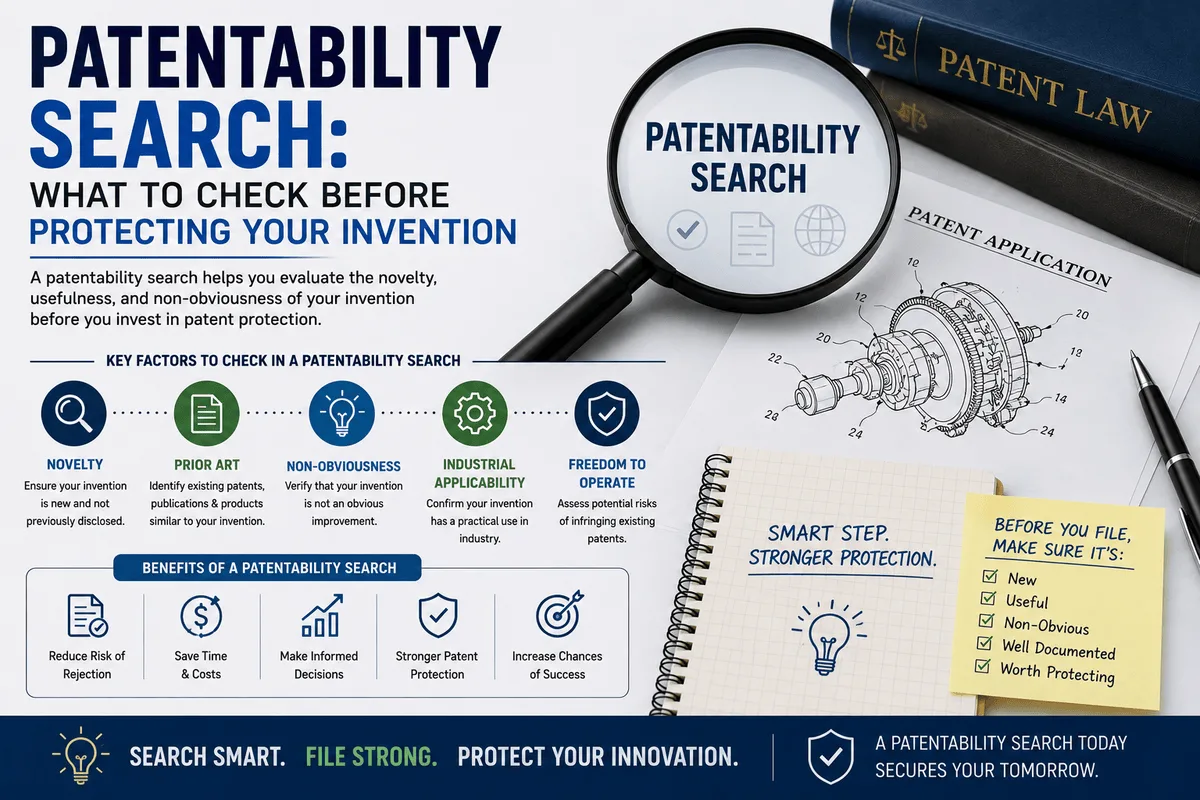
Patentability Search: What to Check Before Protecting Your Invention
- AnalystIP Legal Services
- Business
- 2026-08-20 14:02:44
- 2810K
An invention may feel completely new when it is created, but that does not necessarily mean it is new from a patent perspective. A patentability search can help determine whether similar technology has already been disclosed in an earlier patent, research publication, technical document, or publicly available product information. Discovering this information early can help inventors avoid unexpected challenges and make more informed decisions about protecting their ideas.
Before investing significant resources in patent protection, it is worth understanding what already exists in the relevant technical field. This research can reveal competing technologies, identify potentially important prior art, and highlight the features that may give an invention its strongest point of distinction.
What Should You Check Before Protecting an Invention?
A thorough review of existing technology should go beyond searching for an exact match. Patent documents frequently use different terminology to describe similar concepts, which means a simple keyword search may overlook relevant disclosures.
A broader assessment can examine patent classifications, related applications, cited references, inventors, applicants, and technical publications. Looking at these connections can provide a more complete picture of the technological landscape surrounding an invention.
The results can also help shape the patent application itself. If certain features are already well known, an inventor may choose to focus on a novel combination, technical improvement, or particular implementation. This can make the eventual claims more focused and potentially easier to defend during examination.
Importantly, finding similar prior art does not automatically mean an invention cannot be patented. Patentability depends on the specific facts, the nature of the disclosure, and how the claimed invention differs from what was previously known. Careful analysis is therefore just as important as finding the documents themselves.
Making Better Intellectual Property Decisions
A patent should be considered as part of a broader intellectual property strategy. The information uncovered during early research can influence decisions about patent filing, product development, licensing, commercialization, and competitive positioning.
It can also help inventors decide whether additional development is worthwhile before committing to the application process. In some cases, the search may uncover a promising opportunity to strengthen the invention; in others, it may reveal potential obstacles that should be addressed first.
Ultimately, protecting an invention is not simply about filing an application as quickly as possible. It is about understanding the existing landscape and preparing a strategy around what genuinely makes the invention different. Conducting appropriate research before filing a non provisional patent can help inventors identify potential issues early and move forward with greater clarity and confidence.
2810 people like this



About Premium Author
This post has been authored and published by one of our premium contributors, who are experts in their fields. They bring high-quality, well-researched content that adds significant value to our platform.
Leave a Reply
Please login to post a comment.








0 Comments