

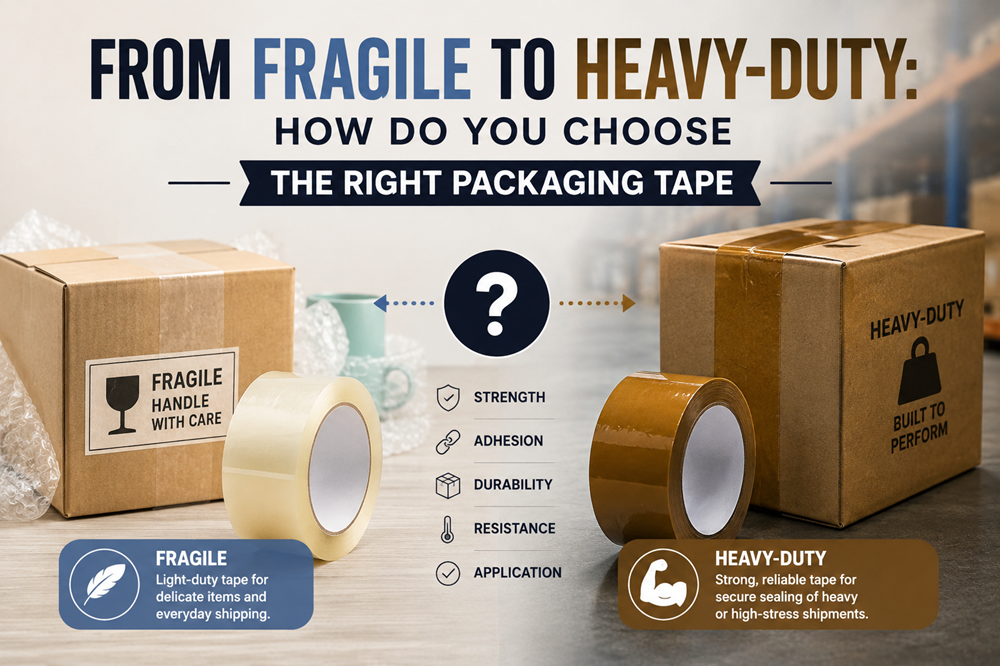
From Fragile to Heavy-Duty: How Do You Choose the Right Packaging Tape
- Packaging Express
- Trending
- 2026-08-17 15:12:43
- 2787K
Nobody thinks about tape until a parcel shows up split open on someone's doorstep. You've picked the right box, wrapped everything up nice, maybe even chucked in a little note, and then the tape gives up halfway through the journey. Small thing, big headache. If you've ever run a shop or posted parcels regularly, you know that feeling all too well.
Here's the bit people miss though: tape isn't just tape. What keeps a birthday card shut is nowhere near what you'd want holding a box of tools together on a bumpy delivery run. So, let's actually get into it.
What Types of Packaging Tape Are There?
Before getting into fragile items and heavy boxes, it helps to know what's actually out there. Most tape falls into a handful of buckets, and once you know which is which, picking the right one gets a lot easier.
Standard tape
The everyday roll. Fine for documents, small gifts, anything that isn't heavy or awkward. Peels off easily too, which customers appreciate.
Strong tape
Built for weight and rough handling. This is what most online sellers reach for once orders start getting heavier or bulkier, since it copes with stacking, weather, and general knocking about in transit.
Reinforced or speciality tape
Think fibreglass strands running through it, or extra-wide rolls for pallets and crates. Not something you need often, but when a job calls for serious hold, nothing else really cuts it.
To keep any fragile item safe, they need proper cushioning underneath any protective wrap to actually stay safe during transit, not just a seal on the outside. For example, wrap a ceramic vase in bubble wrap before boxing it, rather than relying on packaging alone to absorb the knocks it'll take along the way.
Why Does the Type of Tape You Use Actually Matter?
Loads of people grab whatever roll's nearest and hope for the best. Fair enough, for a light parcel it barely matters. But once weight or fragility comes into play, the wrong choice shows up fast.
A rough guide that's worked for us:
| Package Type | Best Tape Choice | Why It Works |
| Light gifts, documents | Standard tape | Holds fine, peels off easily |
| Everyday online orders | Strong tape | Copes with handling, stacking, weather |
| Heavy or bulky goods | Reinforced tape | Extra grip where weight puts pressure on seams |
| Fragile items | Tape plus cushioning underneath | Stops shock reaching the contents |
| Package Type | Best Tape Choice | Why It Works |
If you ship stuff for a living, this table's basically the difference between a happy customer and a one-star review moaning about a smashed vase.
What's Best for Wrapping Something Fragile?
Fragile stuff needs more than just a good seal; it needs something soft underneath to soak up the knocks a parcel takes as it goes through a van, a depot, and then someone's front step.
Small items
Small bubble wrap is great for jewellery, glassware, small electronics, that sort of thing. Wraps neatly round odd shapes too, a mug handle, a picture frame corner, whatever you're dealing with, and doesn't add much bulk so postage stays sensible.
Think of a small ceramics business posting out handmade mugs. Wrap that mug properly, tape it down, and it's got a real shot at arriving in one piece. Skip that bit and rely on scrunched-up paper instead, and you're basically rolling the dice.
What Do You Use for Bigger, Bulkier Stuff?
Furniture pieces, appliances, mirrors, anything with a big flat surface, need a totally different approach.
Large items
Large bubble wrap covers mirrors, screens, framed art, tabletops. It covers a lot more surface area in one go, so there's less chance of a bare patch getting knocked, and it usually gets paired with a good roll of tape to hold everything in place through multiple stops on the journey.
Take a furniture seller shipping out a coffee table. They'd probably wrap the top and edges, then tape around it so nothing slips mid-transit. Skip either bit, and you're looking at scuffs at best, cracked veneer at worst.
How Do You Actually Know If a Tape Is Strong Enough?
This is where a lot of guesswork happens, honestly. Thickness alone doesn't tell you much. What matters more is how well it sticks, how it holds under pressure, and whether it copes with whatever conditions your parcel ends up sitting in.
Things worth checking
- Does it still stick properly in cold or damp storage
- Will it hold the weight of your typical box without stretching
- Does it grip well on the cardboard you're using? Some tapes struggle on recycled stock
- Is it easy to run through a dispenser when you're smashing out a big batch of orders
If you're sending anything over a couple of kilos, don't skimp here. A decent roll costs next to nothing compared to a refund and a bad review.
Does the Box Itself Change Anything?
Yep, and it's easy to forget about. Even the best tape can't save a box that's the wrong size or made from flimsy stock. Going with cardboard box suppliers who actually know their materials makes a real difference before the tape even gets a look-in.
What a good pairing gets you
- Less shifting around inside during transit
- Fewer crushed corners or split edges
- A parcel that looks properly put together when it lands on someone's step
Conclusion
None of this is rocket science once you break it down. Light parcels need something reliable, nothing fancy. Fragile items need bubble wrap doing the hard work underneath a decent seal. Heavier goods need tape with real strength behind it. Chuck a sturdy box into the mix, and you've got a setup that actually protects what's inside, not just something that looks tidy on the outside. Get it right, and you'll see it in fewer damaged returns and way more trust from the people opening your parcels.
FAQs
- What's the actual difference between standard tape and strong tape?
Standard tape's fine for light, everyday parcels. Strong tape's built to handle weight, pressure, and rougher handling along the way.
- Can bubble wrap replace packing peanuts?
Pretty much, yeah, and it usually works better since it moulds around the item and stays put, instead of sliding about like loose peanuts do.
- How do I know if a box's the right size for what I'm sending?
Leave enough room for cushioning, but not so much that the item can slide around freely once it's sealed up.
- Does tape quality genuinely affect whether a parcel survives delivery?
Yeah, weak tape's one of the most common reasons boxes split open mid-transit, way more than people realise.
- Should boxes and tape come from the same supplier?
It helps, honestly. Materials made to work together tend to perform better than mixing random rolls with random boxes.
2787 people like this


About Premium Author
This post has been authored and published by one of our premium contributors, who are experts in their fields. They bring high-quality, well-researched content that adds significant value to our platform.
Leave a Reply
Please login to post a comment.







0 Comments